


A train sign is any sign that identifies a railway, station, platform, train service or railway crossing, and the most recognised version is the locomotive or carriage pictogram used on road and information signs. Whether you want to understand what these signs communicate or commission a durable one for a bar, restaurant, home or business premises, the answer depends on its purpose, its materials and the conditions it will face.
This guide explains what railway signs mean, how they are designed, and how to choose a train sign that keeps its colour and legibility for years. It also covers decorative railway signage, which has become popular for venues wanting a distinctive, heritage look.
What Does a Train Sign Mean?
A train sign means that a railway, railway crossing, station or train-related service is present or approaching, and it is designed to be understood at a glance without words. The meaning shifts slightly depending on where the sign is placed and which category it belongs to.
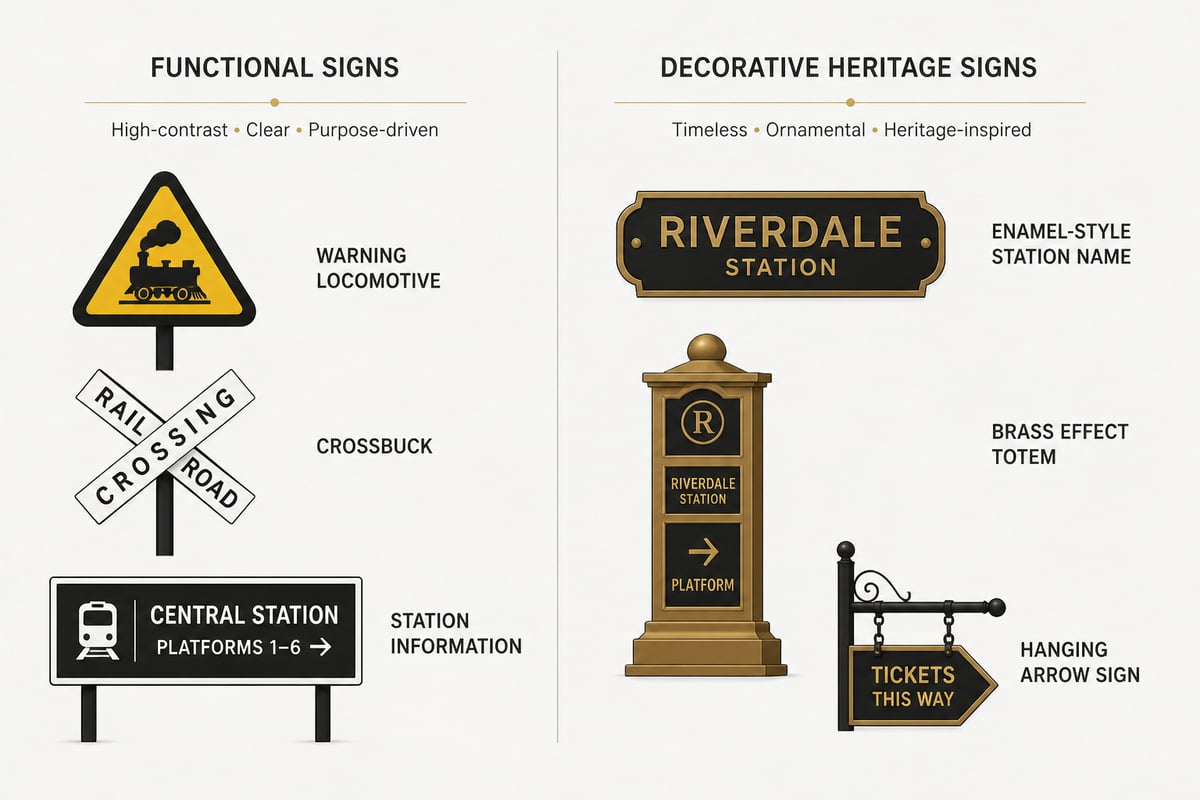
Railway signs fall broadly into four groups:
- Warning signs: Alert road users to a level crossing ahead, often using a locomotive or crossbuck symbol.
- Regulatory signs: Instruct drivers and pedestrians to stop, give way or stay clear of tracks.
- Information signs: Identify stations, platforms, ticket offices, waiting rooms and facilities.
- Decorative and heritage signs: Reproduce historic station nameplates, first-class lounge signs and vintage totems for interiors.
Road authorities publish formal standards for the first two groups. The FHWA identifies the current U.S. MUTCD as the 11th Edition with Revision 1, dated December 2025, which is one example of how official sign design is revised and controlled. South African road signs follow their own national traffic sign regulations, so any sign intended for use on or beside a public road should be checked against local rules before production.
Decorative railway signs sit outside that regulation. Their job is atmosphere, so you have far more freedom over colour, wording and finish.
What Does a Train Sign Look Like?
A train sign typically uses a simple black or white silhouette of a locomotive, carriage or railway crossing symbol on a high-contrast background, usually yellow, white or blue depending on its function. The aim is instant recognition, so detail is kept to a minimum.
Common visual features include:
- A side-on locomotive pictogram with a chimney, boiler and wheels for older steam-style signs, or a streamlined front-on carriage for modern services.
- A crossbuck, the X-shaped sign that marks a railway crossing.
- Bold, sans-serif lettering for station names and platform numbers, set in capitals for legibility.
- A border or rail line framing the sign, which reinforces the railway association.
Heritage-style signs look quite different. They tend to feature serif or slab lettering, aged enamel or rusted finishes, brass effect panels, and arrow or totem shapes. These are the designs most often chosen for restaurants, home bars and entertainment areas.
What Is the Symbol for a Train?
The standard symbol for a train is a simplified side view of a locomotive, though a front-facing carriage and a pair of rails are also widely used. Each version serves a different context.
The side-on locomotive is the traditional choice for warning signs and heritage branding. The front-facing carriage with two headlights suits modern passenger information, such as station wayfinding and transport maps. Rails and sleepers, drawn as parallel lines with cross bars, work well as a minimal border or background element.
For a venue sign, symbol choice sets the tone. A steam locomotive suggests nostalgia and craft, which suits a themed bar or restaurant. A clean modern carriage icon suits a transport-related business, a depot or an events company.
Common Train Sign Types and Where They Belong
Different railway signs suit different locations, and matching the type to the setting prevents both confusion and wasted spend. The table below compares the main options.
| Sign type | Typical use | Common materials | Best setting |
|---|---|---|---|
| Station nameplate | Naming a space or building | Aluminium, enamel-look metal | Entrances, bar walls |
| Totem sign | Marking a location from a distance | Acrylic, fabricated metal | Forecourts, restaurants |
| Platform or class sign | Zones and facilities | Printed aluminium, acrylic | Interior wayfinding |
| Hanging arrow sign | Directional decoration | Wood, metal | Bars, patios, homes |
| Brass effect plaque | Prestige naming | Solid or brass effect finishes | Reception, home entrances |
| Neon train sign | Illuminated feature | Glass or LED neon | Bars, restaurants, feature walls |
Totem and nameplate formats borrow directly from station design, which is why they translate so well to hospitality. A "First Class" lounge sign over a VIP area, or a "Platform 9" marker for a beer garden entrance, gives guests an instant sense of theme.
Materials That Last: Choosing a Durable Train Sign
The right material determines whether a train sign survives South African sun, coastal salt air and seasonal rain, so choose it according to location rather than appearance alone. A sign that looks perfect indoors can fade or warp within a season on an exposed wall.
Outdoor Signs
For exterior use, prioritise weather resistance and UV stability:
- Aluminium composite and powder-coated aluminium resist corrosion and hold colour well. They suit both functional and decorative signs.
- UV-stable vinyl and inks matter for printed graphics. Cheaper inks can fade quickly under strong sun, particularly in high-altitude or intense coastal exposure.
- Stainless steel and brass effect finishes handle humid, salty air better than untreated mild steel, which rusts unless properly sealed.
Coastal buyers should be especially cautious. Salt accelerates corrosion on fixings as well as on the sign face, so stainless fasteners are worth specifying.
Indoor Signs
Indoors, you have more freedom. Acrylic gives a clean, polished look and takes brass or mirror effects well. Wood suits rustic or vintage interiors. Aged and rusty-look finishes are produced deliberately, so a decorative "weathered" appearance does not mean the sign is deteriorating.
Matching Material to Purpose
A practical rule is to decide three things first: where the sign will hang, how long it needs to last, and how closely it will be viewed. Signs seen from a distance reward bold shapes and robust construction. Signs viewed up close reward fine detail and quality finishing. A reputable supplier will advise on the best materials and production method for your situation, whether you need a single piece or several hundred.
Illuminated Train Signs for Bars and Restaurants
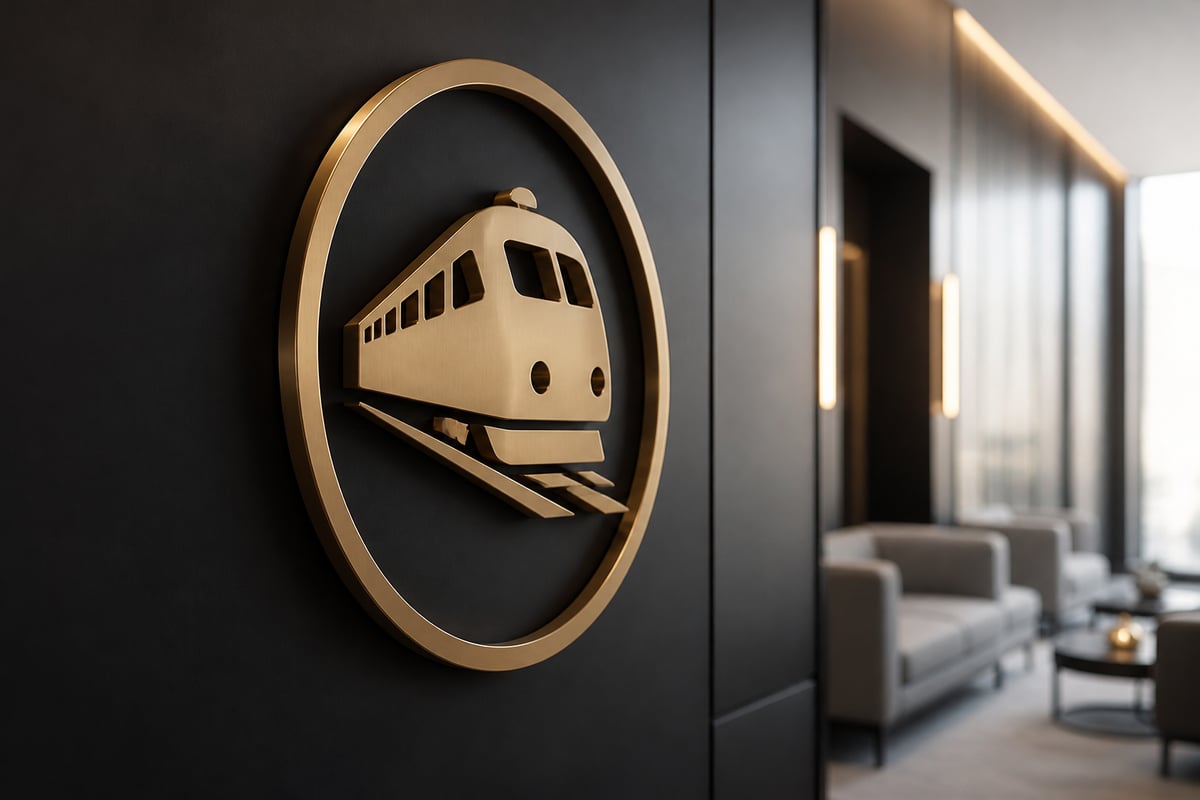
An illuminated train sign draws attention after dark and gives a venue a distinctive identity, which is why neon and lit lettering suit hospitality so well. A glowing locomotive, a "Station Bar" name or a "Last Train" slogan creates a talking point that photographs well.
Lighting options include:
- Neon and LED neon: Flexible tubing shaped into a train silhouette or script lettering. LED versions use less power and generate less heat.
- Backlit and halo-lit letters: Individual letters lit from behind, producing a soft glow around a heritage-style name.
- Lightboxes: A printed railway poster or station sign in an illuminated frame.
Dimensional lettering works particularly well for station-style names. Signshoponline manufactures and fabricates 3D channel letters, both illuminated and non-illuminated, which suit a bold "STATION" or "PLATFORM" wordmark on a restaurant frontage or feature wall.
For neon pieces specifically, Signshoponline's turnaround time for most neon signs is generally 6 to 8 days, which helps when planning a venue launch or seasonal refresh.
Designing a Train Sign That Stays Legible
A legible train sign relies on contrast, lettering size and restraint, since over-decorated designs lose clarity quickly. Heritage style should add character without sacrificing readability.
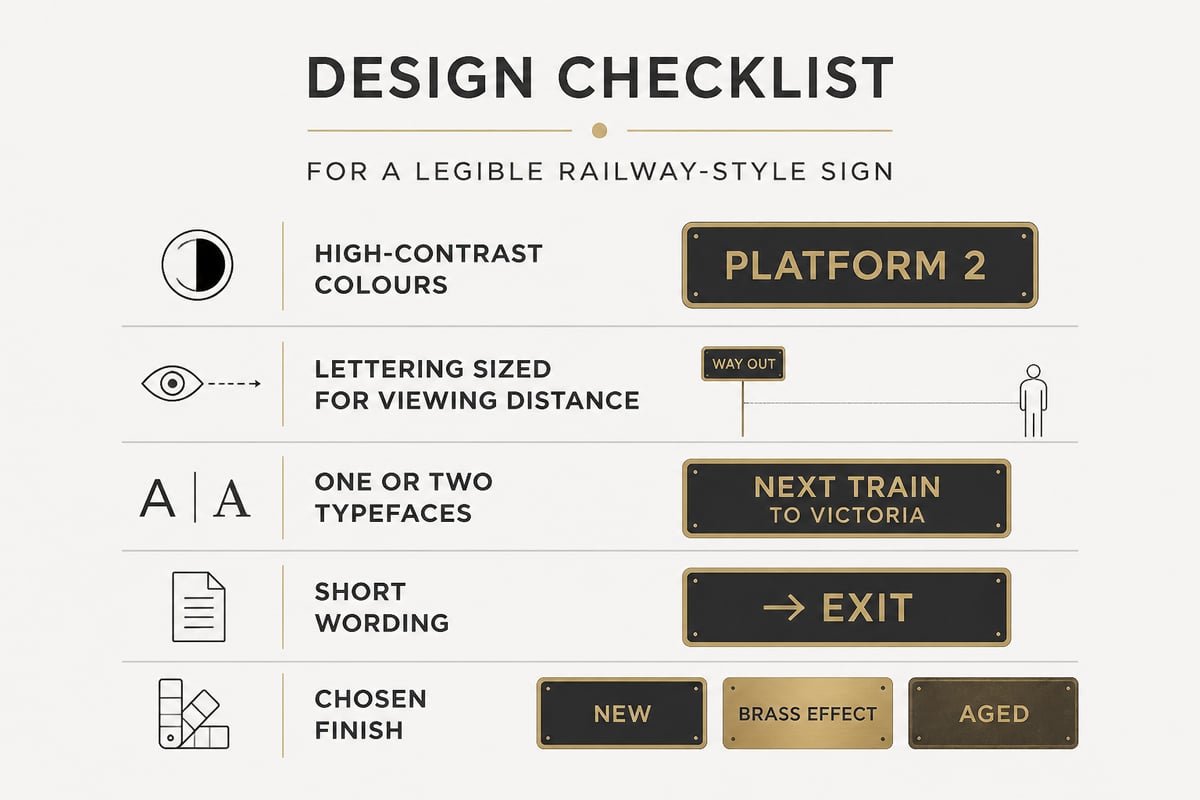
Follow these principles:
- Prioritise contrast. Light lettering on a dark ground, or the reverse, reads better than mid-tones against each other.
- Size lettering for viewing distance. Text on a forecourt totem must be larger than text on an interior door plate.
- Limit typefaces to one or two. A slab or serif face with a plain secondary face keeps the railway feel without clutter.
- Keep wording short. Station names, platform numbers and single-word zone labels work best.
- Plan the finish deliberately. Choose between crisp new, brass effect or aged rust before design begins, because it changes how colours and lettering are prepared.
If you plan to pair a sign with other branded items, consistency matters. A vehicle wrap, a banner and a station-style entrance sign should share colours and lettering so the venue reads as one identity. For vehicle-related lettering and plates, resources such as Number1Plates show how bespoke, durable plate design is approached, which is a useful reference for anyone thinking about consistent typography across signage and vehicles.
Railway Sign Rules and Safety Considerations
Any train sign used for real safety purposes, such as marking a level crossing, must comply with national road and rail signage regulations, while purely decorative signs carry no such requirement. Confusing the two causes problems.
Keep these points in mind:
- Do not place realistic warning signs near public roads unless they are authorised. A convincing crossbuck at a driveway could mislead drivers.
- Treat decorative signs as décor. Position them clearly within your premises and away from traffic-facing sightlines.
- Check mounting and load. Heavy totems and hanging signs need secure fixings and, for large installations, professional installation.
- Consider electrical safety. Illuminated signs should be wired and installed correctly, particularly in damp or outdoor locations.
Signage installed on buildings or beside public roads may also need municipal approval in your area. Requirements differ between municipalities, so confirm them before fabrication begins.
Caring for Your Train Sign
A well-made train sign needs little maintenance, but light, regular care extends its life considerably. Clean outdoor signs with mild soapy water and a soft cloth, avoiding abrasive pads that scratch finishes and printed surfaces. Inspect fixings periodically, especially in coastal areas, and replace any that show rust.
Illuminated signs benefit from occasional checks on transformers, connections and seals. If a section flickers or fails, address it promptly, because moisture ingress is the most common cause of premature failure in outdoor lighting.
Aged and rusty-look finishes should be left alone. Polishing or repainting them removes the effect you paid for.
Choosing a Supplier for Your Train Sign
The best supplier for a train sign is one that advises on materials, handles design and manufacture, and stands behind the finished product. Ask about experience, installation support and guarantees before committing.
Signshoponline is a full-service signage company with over 20 years of experience in manufacturing, installation and design. Its work is guaranteed, and it advises on the best materials and production methods for projects of any size. For specifications, sizes and options on a particular piece, the product pages and contact page are the right place to confirm details.
FAQ
What is the sign for a train?
The sign for a train is usually a simplified locomotive or carriage pictogram, often paired with crossbuck or rail lines. For station and facility signage, the word "Station" or "Platform" with an arrow or train icon serves the same purpose.
Can I use a train sign at my home or bar?
Yes. Decorative railway signs such as station nameplates, totems and neon locomotives are popular for bars, restaurants and home entertainment areas. Keep realistic warning-style signs away from public roads so they are not mistaken for official signage.
How long does an outdoor train sign last?
Lifespan depends on material, finish and exposure. Powder-coated aluminium, stainless fixings and UV-stable inks generally hold up better in strong sun or coastal air than untreated metal or standard inks.
Start by deciding where your train sign will hang and whether it needs to be illuminated, then note the viewing distance and the finish you prefer. With those details ready, Signshoponline can advise on materials and production, and if you want a dimensional station-style name, its fabricated 3D signage is a good place to begin. To discuss your project with a team that guarantees its work, get a quote from Signshoponline and move your railway-themed sign from idea to installation.


