

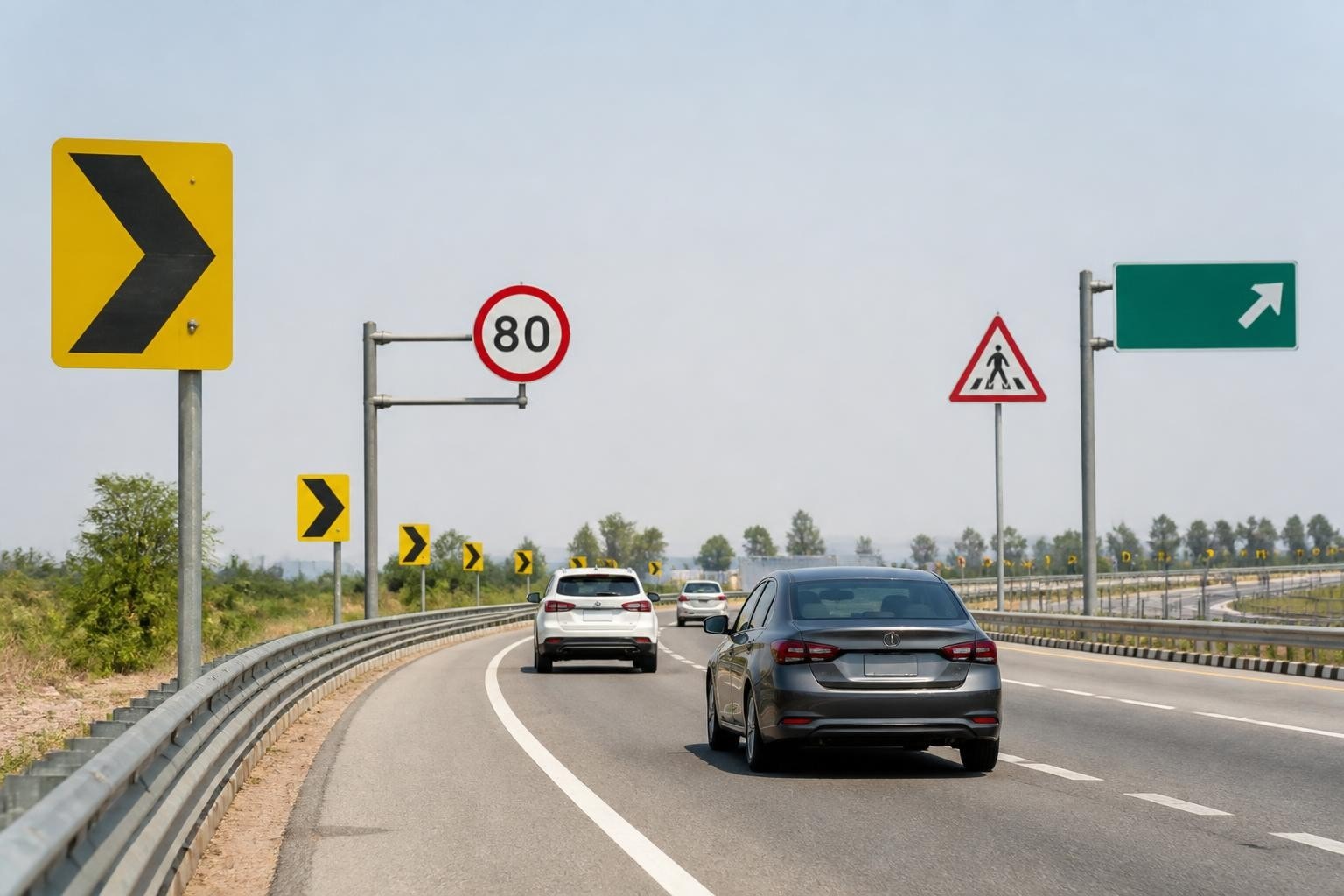
Road signage forms the backbone of modern traffic management systems, communicating critical information to drivers, pedestrians, and cyclists in split seconds. These carefully designed visual guides regulate behaviour, warn of hazards, provide direction, and ultimately save lives on our increasingly busy road networks. As road infrastructure evolves alongside autonomous vehicles, smart cities, and sustainability initiatives, the importance of effective road signage has never been more pronounced. Understanding the principles, standards, and best practices behind these ubiquitous markers helps stakeholders create safer, more efficient transportation environments.
Understanding the Core Categories of Road Signage
Road signage falls into distinct functional categories, each serving specific communication purposes within the traffic environment. Regulatory signs enforce legal requirements, whilst warning signs alert road users to potential hazards ahead.
Regulatory Road Signage
These command-focused markers dictate what road users must or must not do. Stop signs, yield signs, speed limits, and no-entry indicators fall into this critical category. The Manual on Uniform Traffic Control Devices establishes comprehensive standards for regulatory sign design, ensuring consistency across jurisdictions.
Key characteristics of regulatory signs:
- Distinctive shapes (octagon for stop, triangle for yield)
- High-contrast colour schemes (typically red, white, and black)
- Legally enforceable instructions
- Strategic placement at decision points
Regulatory road signage must be immediately recognisable even in adverse weather conditions or low visibility. The retroreflective materials used in modern signs ensure visibility during night-time driving, whilst standardised fonts and symbol sizes guarantee legibility at prescribed distances.
Warning and Cautionary Signs
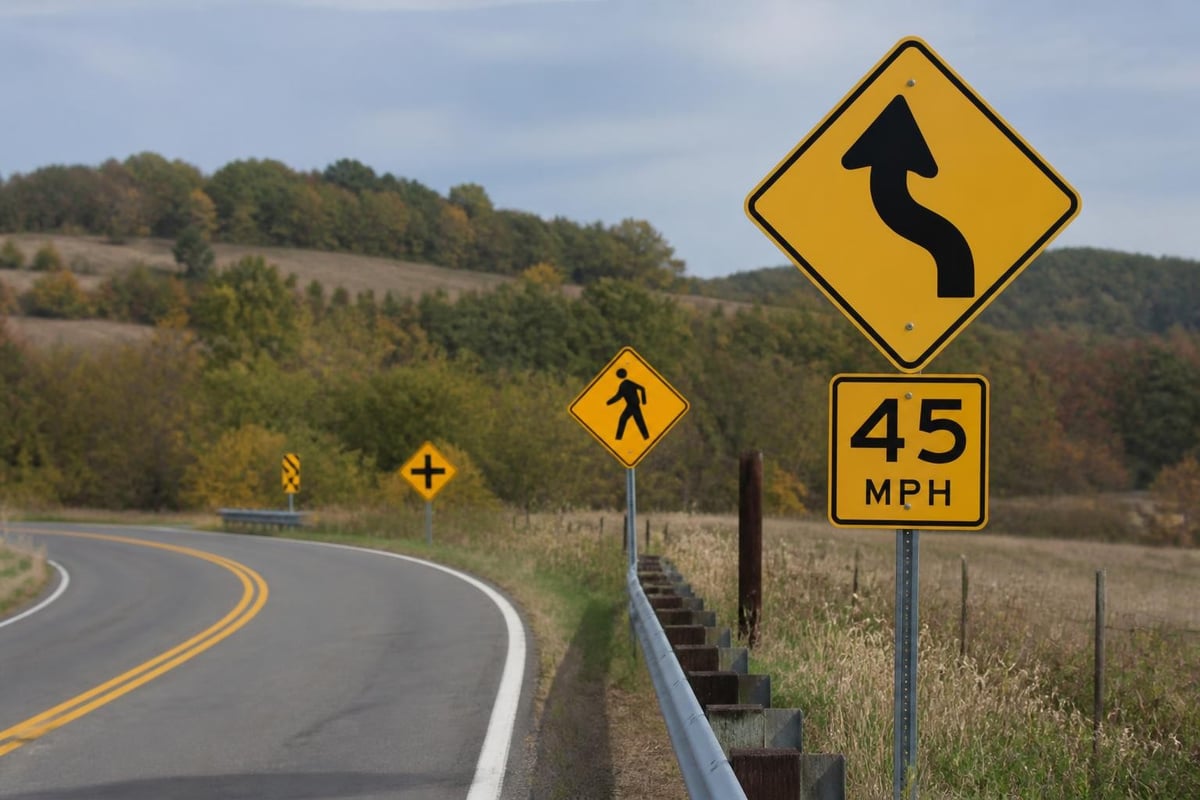
Warning road signage prepares drivers for upcoming changes in road conditions, geometric features, or potential hazards. These typically feature yellow or amber backgrounds with black symbols or text, creating high visibility without the command authority of regulatory markers.
Common warning categories include curve alerts, junction notifications, pedestrian crossings, and wildlife zones. The UK Traffic Signs Manual provides detailed guidance on appropriate warning sign placement distances based on road classification and speed limits.
Design Principles and Human Factors in Road Signage
Effective road signage balances aesthetic considerations with scientific principles of human perception and cognition. Drivers process visual information within milliseconds whilst managing vehicle control, making clarity paramount.
Legibility and Comprehension Standards
Research documented in the National Academies' Human Factors Guidelines demonstrates that sign legibility depends on letter height, stroke width, contrast ratio, and viewing distance. The relationship between these variables determines whether a driver travelling at 110 km/h can read and process information in time to respond appropriately.
| Sign Type | Minimum Letter Height | Recommended Viewing Distance | Response Time Required |
|---|---|---|---|
| Motorway directional | 200mm | 200-300m | 3-5 seconds |
| Urban regulatory | 100mm | 50-75m | 2-3 seconds |
| Warning signs | 150mm | 100-150m | 2-4 seconds |
| Pedestrian information | 75mm | 15-30m | 1-2 seconds |
Colour psychology plays equally vital roles in road signage effectiveness. Red universally signifies prohibition or danger, whilst green indicates permissive movement or directional guidance. These associations transcend cultural boundaries, supporting international driver mobility.
Symbolic Communication Versus Text
Modern road signage increasingly favours pictograms over text-based messages. Symbols communicate across language barriers and require less processing time than reading words. However, certain concepts resist simple pictorial representation, necessitating hybrid approaches.
The evolution from text-heavy signs to symbol-dominant design reflects growing evidence about driver attention capacity. Studies show that drivers can accurately identify and respond to well-designed symbols 30-40% faster than equivalent text messages, a critical advantage when reaction time determines safety outcomes.
Material Selection and Manufacturing Considerations
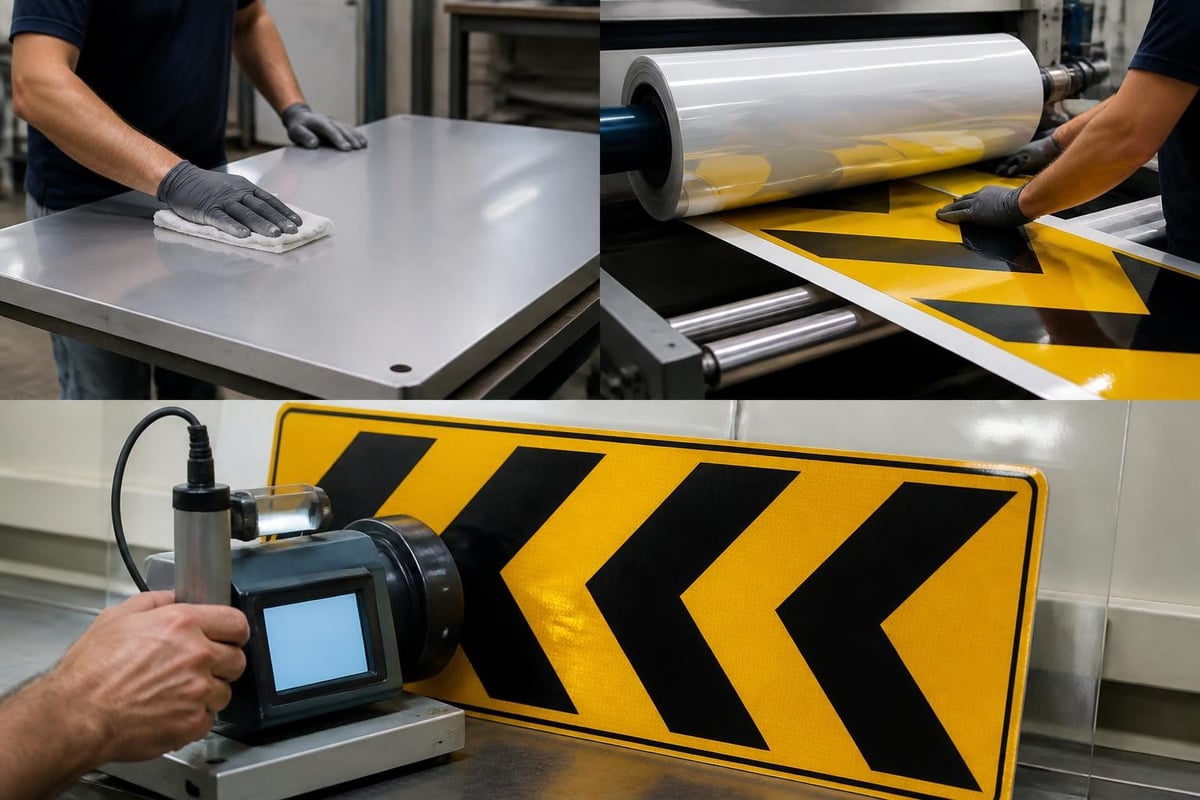
Contemporary road signage manufacturing combines traditional metalworking with advanced material science. Aluminium substrates remain industry standard due to their strength-to-weight ratio, corrosion resistance, and recyclability.
Reflective Technology Advances
Three main retroreflective technologies dominate current road signage production:
- Engineer Grade – suitable for low-speed environments and temporary applications
- High Intensity – standard for most permanent road signage installations
- Diamond Grade – premium reflectivity for motorways and critical warning signs
These materials contain microscopic glass beads or prismatic elements that redirect light back toward its source. A vehicle's headlights illuminate the sign, which then reflects light directly into the driver's eyes, creating the characteristic bright appearance of road signage at night.
Durability requirements vary based on environmental exposure. Coastal installations face salt spray corrosion, whilst inland locations might prioritise UV resistance. Quality manufacturers test samples through accelerated weathering protocols, ensuring 7-10 year performance guarantees.
Illumination Options for Critical Installations
Certain locations demand internally illuminated road signage rather than passive retroreflection. Lightbox technology provides consistent visibility regardless of ambient lighting or headlight position. Lightbox Signage solutions combine energy-efficient LED systems with weather-resistant housings, delivering reliable performance in tunnels, underpasses, and critical junction approaches where standard reflective signs might prove insufficient.

Traffic authorities increasingly specify illuminated solutions for variable message signs, which display changing information about congestion, incidents, or weather conditions. These dynamic systems represent the convergence of traditional road signage with digital technology.
Installation Standards and Placement Protocols
Proper road signage installation directly impacts effectiveness and longevity. Standards specify mounting heights, lateral offsets, and post materials based on road classification and local conditions.
Urban environments typically require mounting heights between 2.1-2.4 metres to the bottom edge of signs, providing pedestrian clearance whilst maintaining driver sight lines. Rural installations may sit higher, particularly on faster roads where increased visibility distance justifies elevated placement.
Critical installation factors include:
- Breakaway post systems that collapse upon impact, reducing injury severity
- Appropriate foundation depth based on soil conditions and wind loading
- Orientation perpendicular to traffic flow for optimal retroreflective performance
- Adequate setback from the travelled way to provide recovery zones
The Transportation Research Board's research on sign support systems provides evidence-based guidance for reducing crash severity when errant vehicles strike sign installations. Modern designs prioritise occupant protection over sign preservation.
Maintenance Programmes and Performance Assessment
Road signage deteriorates through environmental exposure, physical damage, and material fatigue. Systematic inspection and replacement programmes maintain network safety and regulatory compliance.
Retroreflectivity Assessment Methods
Authorities employ several approaches to evaluate road signage performance:
- Visual night-time inspections comparing signs to reference standards
- Handheld retroreflectometer measurements at specific points
- Mobile retroreflectivity assessment vehicles scanning entire routes
- Predictive replacement based on installation dates and expected service life
Minimum retroreflectivity thresholds ensure signs remain visible under worst-case conditions. When measurements fall below these standards, replacement becomes mandatory regardless of sign appearance during daylight.
| Sign Colour | Minimum Retroreflectivity (cd/lx/m²) | Typical Service Life | Replacement Priority |
|---|---|---|---|
| White | 50 | 7-10 years | High |
| Yellow | 40 | 7-10 years | High |
| Red | 14 | 5-8 years | Critical |
| Green | 15 | 7-10 years | Medium |
| Blue | 10 | 7-10 years | Medium |
Proactive maintenance proves more cost-effective than reactive replacement. Systematic programmes prevent degradation from reaching dangerous levels whilst allowing budget planning and workforce scheduling.
Cleaning and Minor Repairs
Regular cleaning extends road signage service life significantly. Accumulated dirt, biological growth, and atmospheric pollution reduce retroreflectivity even when the underlying material remains sound. Pressure washing with appropriate detergents restores performance without damaging reflective surfaces.
Minor damage such as small dents, loose fasteners, or vegetation encroachment requires prompt attention. These issues compound rapidly, transforming simple fixes into complete replacements when neglected.
Pedestrian Safety and Vulnerable Road User Considerations
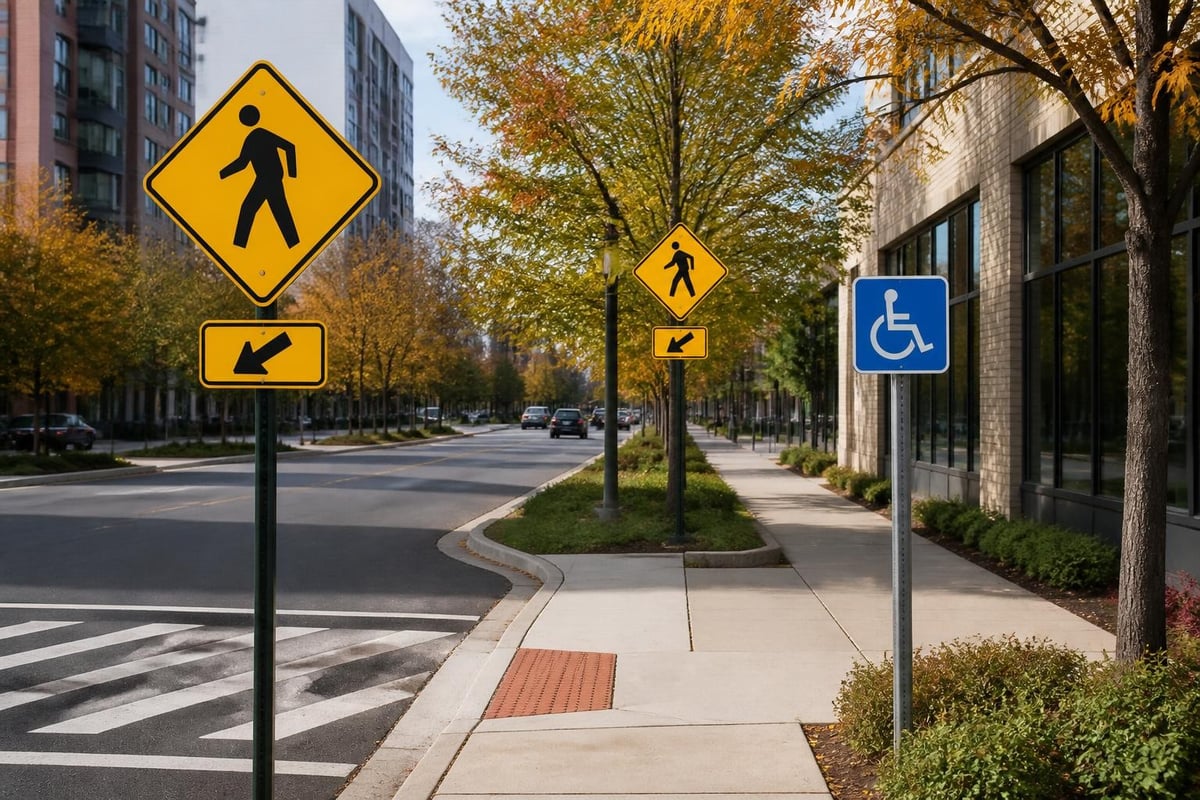
Whilst vehicular traffic receives primary consideration in road signage design, pedestrian and cyclist safety demands equal attention. The WHO Pedestrian Safety Manual emphasises signage's role in protecting vulnerable road users through clear crosswalk markings, advance warnings to drivers, and dedicated pathway guidance.
Pedestrian-oriented road signage often features different scale and mounting characteristics compared to driver-focused installations. Lower mounting heights, simplified graphics, and tactile elements support users with varying abilities and attention patterns.
School Zones and Special Protection Areas
Enhanced road signage protocols apply near schools, hospitals, retirement communities, and recreational facilities. Fluorescent yellow-green backgrounds command attention more effectively than standard yellow, particularly in peripheral vision.
Speed limit signs in these zones often incorporate flashing LED borders activated during peak pedestrian times. This variable enforcement approach balances safety enhancement with avoiding sign clutter that reduces overall effectiveness.
Integration with parking and traffic signs creates comprehensive information systems guiding both through-traffic and destination-seeking drivers. Clear hierarchies prevent cognitive overload whilst ensuring critical safety messages reach their audience.
Emerging Technologies and Future Developments
Road signage evolution continues through materials innovation, digital integration, and connectivity advances. Solar-powered signs with integral batteries enable illumination and dynamic displays in locations lacking electrical infrastructure.
Connected vehicle technology promises revolutionary changes in how information reaches drivers. Vehicle-to-infrastructure (V2I) communication may eventually supplement or replace certain roadside signs, transmitting data directly to dashboard displays or heads-up systems.
However, physical road signage retains crucial advantages. It functions independently of vehicle technology, serves all road users including pedestrians and cyclists, and provides redundancy when electronic systems fail. The most likely future involves hybrid systems where traditional signs work alongside digital enhancements rather than complete replacement.
Regulatory Compliance and Legal Implications
Road authorities bear legal responsibilities for maintaining adequate signage standards. Liability concerns arise when crashes occur in locations with missing, obscured, or non-compliant signs. Documentation of inspection programmes, maintenance records, and compliance with national standards provides essential legal protection.
Private property owners installing road signage on approaches or within car parks must ensure their installations don't contradict official traffic control devices. Confusion created by unofficial signs may attract liability if accidents result.
Compliance essentials include:
- Adherence to national design standards for colour, shape, and messaging
- Appropriate retroreflectivity levels throughout the sign's service life
- Correct placement following approved traffic engineering studies
- Regular documented inspections and maintenance interventions
- Timely removal of damaged, obsolete, or misleading installations
Professional signage suppliers maintain current knowledge of evolving standards, ensuring clients receive compliant products suitable for their specific applications. Whether producing directional signs for private estates or larger billboard signs for commercial promotion, understanding the distinction between traffic control devices and general wayfinding prevents regulatory conflicts.
Integration with Broader Traffic Management Systems
Modern road signage functions as one component within comprehensive traffic management ecosystems. Variable message signs coordinate with traffic signal timing, incident detection systems, and journey planning applications to optimise network performance.
Smart motorway concepts rely heavily on overhead gantry signs displaying lane availability, speed limits, and hazard warnings. These dynamic systems respond to real-time conditions, adjusting messages based on traffic density, weather, and incidents.
The challenge lies in maintaining driver trust and compliance. Research indicates that frequently changing messages or inconsistent information reduces sign credibility, causing drivers to ignore guidance. Careful programming protocols ensure displayed information remains accurate and relevant, preserving the authority road signage commands.
Effective road signage represents far more than simple markers along our highways; it embodies decades of research into human factors, materials science, and traffic engineering principles working together to create safer, more efficient road networks. Whether you're a municipality planning infrastructure upgrades, a private developer creating accessible car parks, or a business seeking compliant wayfinding solutions, partnering with experienced professionals ensures your signage meets both regulatory standards and practical performance requirements. Signshoponline brings comprehensive expertise in signage design and manufacturing, delivering solutions that combine aesthetic appeal with technical compliance for projects of any scale.


