


LED sign lights are light-emitting diode modules, strips and fixtures that illuminate a sign from behind, inside or from the front, and they are now the standard choice for business signage because they use little power, last for years and stay bright in all weather. The right option depends on the type of sign you have, where it is mounted and how far away your customers will see it.
This guide explains the main types of LED lighting for signs, how to judge brightness and colour, which safety standards matter, and how to estimate running costs before you commit.
What Are LED Sign Lights and How Do They Work?
LED sign lights work by passing a small electrical current through semiconductor chips, which emit light efficiently with very little heat. Those chips are mounted on strips, modules or fixtures, then fitted inside or around a sign so the face, letters or graphics glow evenly.
Compared with the neon tubes and fluorescent lamps they replaced, LEDs offer clear practical advantages:
- Lower energy use, which reduces your monthly electricity bill.
- Longer lifespan, so fewer replacements and less maintenance access.
- Durability, because solid-state chips cope with vibration, cold and heat better than glass tubes.
- Design flexibility, since modules are small enough to fit shallow letters and slim lightboxes.
- Low voltage operation, which is safer to install and easier to wire.
For a business owner, the practical outcome is a sign that stays presentable from dusk until dawn without frequent servicing. That matters most for signs mounted high on buildings or pylons, where every maintenance visit means hiring access equipment.
The Main Types of LED Lighting for Signs
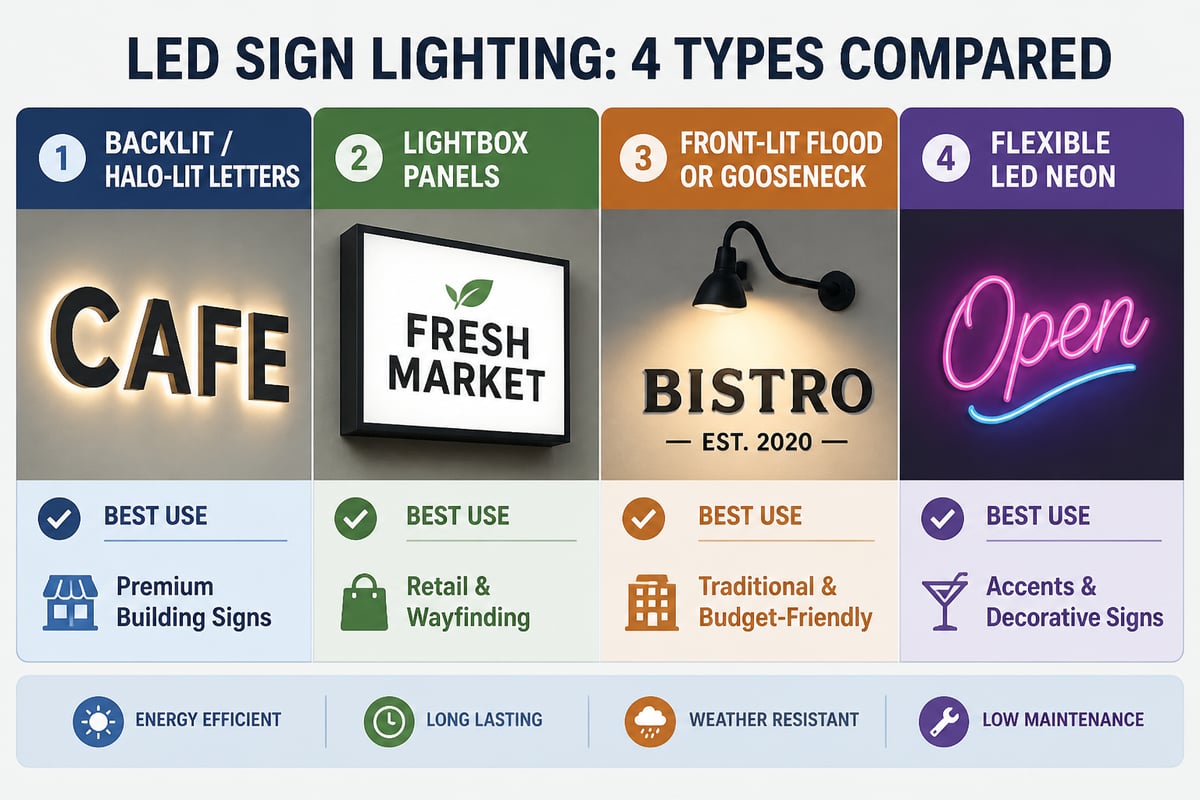
There are four broad categories of LED lighting used in commercial signage: backlit modules, edge-lit panels, front-lit flood and gooseneck lights, and neon-style flexible LED. Each suits a different sign format.
Backlit and Halo-Lit Letters
Backlit systems place LED modules inside a sign face or behind raised letters. Light either passes through a translucent face or washes against the wall behind to create a halo. This is the look associated with premium shopfronts and corporate reception areas. Fabricated letters of this kind are available as 3D channel letters, and the LED backlit range covers face-lit and halo options.
Lightboxes
A lightbox uses an array of LED strips or panels behind a printed or acrylic face. It suits menu displays, shop fascias and retail promotions where you want a flat, evenly lit surface. Lightboxes are also easy to update, because the graphic can be swapped without replacing the lighting.
Front-Lit Flood and Gooseneck Lights
These fixtures sit in front of or above a sign and throw light onto its surface. They are common for billboards, painted wall signs, monument signs and metal panels that cannot be lit internally. Swan neck and bullet-style fixtures are typical examples.
LED Neon
Flexible LED neon recreates the look of glass neon in a silicone or PVC tube. It is lighter, cooler to touch and far less fragile than glass, which makes it popular for indoor feature walls, cafés, bars and salons.
How to Choose LED Sign Lights for Your Sign Type
The best way to choose is to start from the sign you already have or plan to build, then work backwards to the lighting method. The table below matches common business signs with the lighting that usually suits them.
| Sign type | Typical LED lighting | Best for |
|---|---|---|
| Shop fascia | Backlit or halo-lit letters | Retail, restaurants, offices |
| Pylon or monument | Internal LED modules or flood lights | Roadside businesses, estates, dealerships |
| Menu or promotional display | Slim LED lightbox | Food outlets, counters, interiors |
| Painted or metal panel | Front-lit flood or gooseneck | Heritage buildings, billboards |
| Feature wall | LED neon | Bars, salons, event spaces |
Two further questions narrow the decision. First, is the sign indoors or outdoors? Outdoor installations need weatherproof, dust-sealed fixtures. Second, who needs to see it, and from how far? A sign read by drivers needs far more output and larger letter heights than one read by pedestrians a few metres away. Roadside businesses can look at general research on roadway visibility and illumination when planning brightness and legibility.
For larger roadside displays, pylon signs and monument signs are the formats that most often combine internal LED lighting with a robust weatherproof housing.
Brightness, Colour Temperature and Visibility
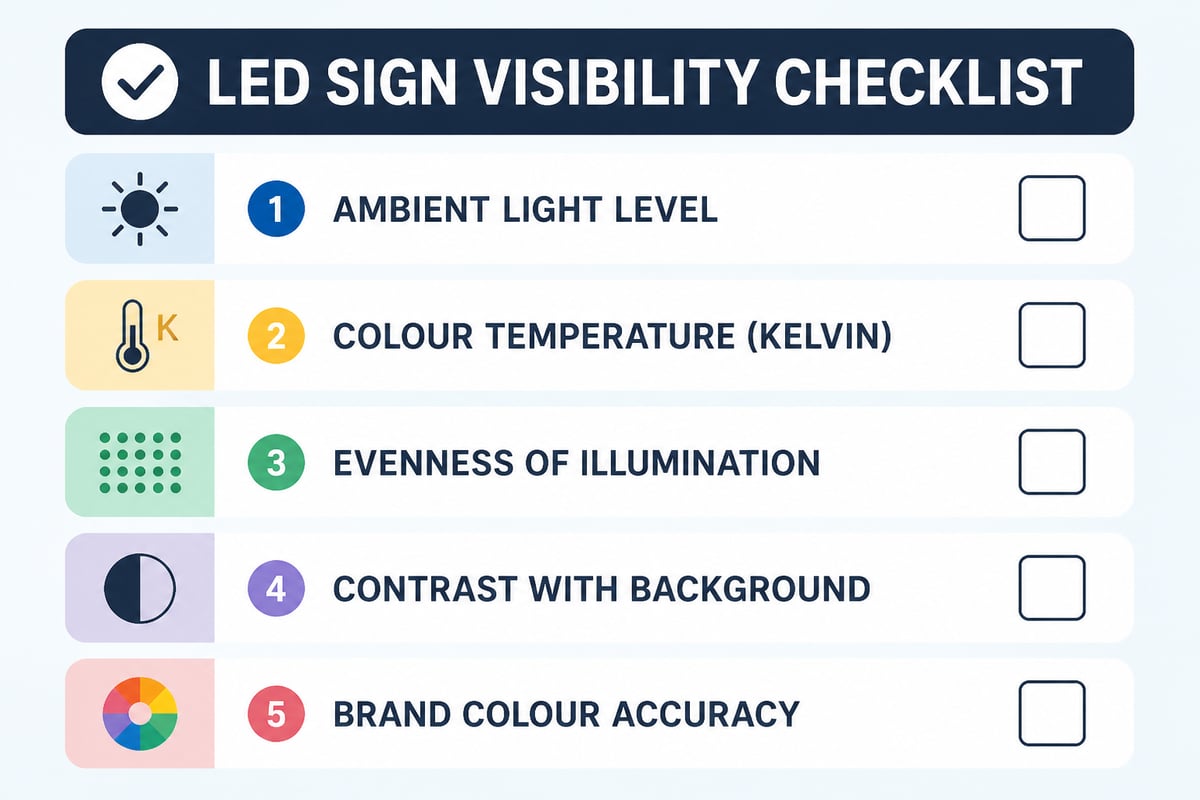
Brightness is measured in lumens for general lighting and in nits for self-illuminated displays, and the correct level depends on ambient light, not on a single "bright is better" rule. A sign that is too bright glares and washes out fine detail, while one that is too dim disappears against streetlights and neighbouring signs.
Consider these factors together:
- Ambient light. A sign on a busy, well-lit road needs more output than one in a quiet residential street.
- Colour temperature. Cooler white feels crisp and modern, while warm white feels inviting and suits hospitality.
- Evenness. Visible hotspots or dark patches make a sign look cheap. Good module spacing and a diffuser layer fix this.
- Contrast. Light lettering on a dark background is generally easier to read at night than the reverse.
- Brand colours. Coloured LEDs and RGB modules can match a logo, but check that the colour holds consistently across the whole sign.
Dimmable drivers are worth the small extra cost. They let you reduce output late at night or in dim conditions, which cuts glare and saves energy.
Safety Standards and Certification
Certified components protect your premises, your insurance position and your customers, so it is sensible to ask suppliers which standards their products meet. UL Solutions lists UL 48 as the standard for electric signs and UL 8750 as the standard for LED equipment used in lighting products, and these are widely recognised reference points when comparing components.
In South Africa, electrical installations must also comply with local wiring regulations, so a qualified electrician should connect and certify the supply. Look for these points when reviewing a quotation:
- Power supplies and drivers from reputable manufacturers, with stated ratings.
- An ingress protection (IP) rating suited to outdoor use, with higher ratings preferred for exposed locations.
- Surge protection, which matters in areas with unstable supply or frequent storms.
- Clear warranty terms covering both LED modules and drivers.
Cheap, unbranded modules and drivers are the most common source of early failure. A slightly higher upfront cost for quality components usually pays back in avoided call-outs.
Running Costs, Lifespan and Maintenance
LED sign lighting is inexpensive to run, and its overall cost is shaped by three things: wattage, hours of operation and component quality. Modern LED modules commonly carry long rated lifespans, which at ten hours a night represents many years of service. Exact figures vary by manufacturer, so request the rated hours and the warranty in writing.
To estimate your own running cost, multiply the sign's total wattage by the hours it is switched on each day, divide by 1,000 to get kilowatt-hours, then multiply by your electricity tariff. A sign drawing 200 watts for ten hours uses two kilowatt-hours a day, which you can then price against your municipal or prepaid rate.
Maintenance is light, but not zero:
- Clean the sign face every few months to remove dust and grime that dim the output.
- Check seals and gaskets on outdoor signs after heavy rain.
- Inspect drivers and wiring annually, especially on high or hard-to-reach installations.
- Replace failed modules promptly, since one dark section spoils the whole sign.
A photocell or timer also prevents signs from burning during daylight, which is a simple saving many businesses forget to set up.
Planning an Illuminated Sign Project
A smooth project follows a clear sequence, and settling the early decisions saves cost later. Most signage projects work through these steps:
- Define the goal. Decide whether the sign must attract passing traffic, guide visitors or reinforce a brand indoors.
- Check local requirements. Municipal by-laws and landlord approvals can limit size, height and illumination, so confirm these before design.
- Choose the lighting method. Match backlit, front-lit or neon styles to the sign type, using the table above.
- Specify power and controls. Plan where the supply will come from, and add dimming and timers.
- Approve a design proof. Review letter heights, colours and how the sign looks at night, not only in daylight.
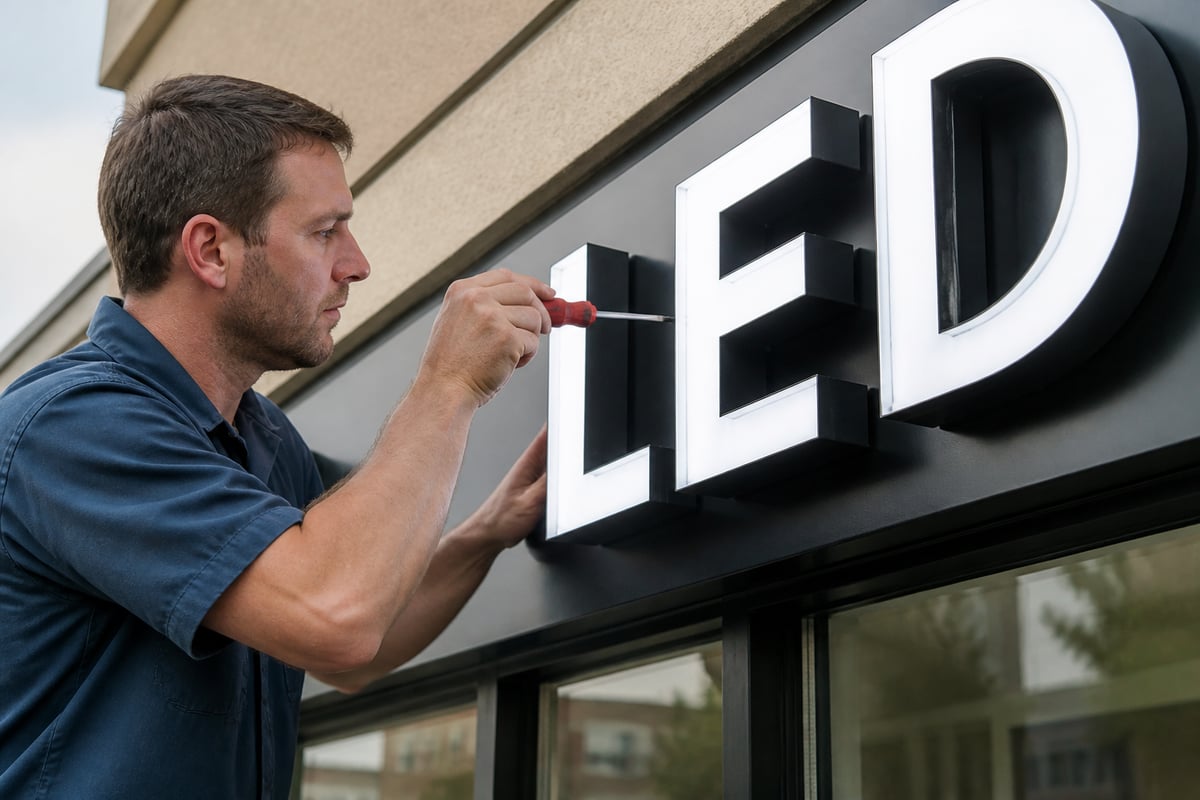
- Install and certify. Use qualified installers and keep the compliance paperwork.
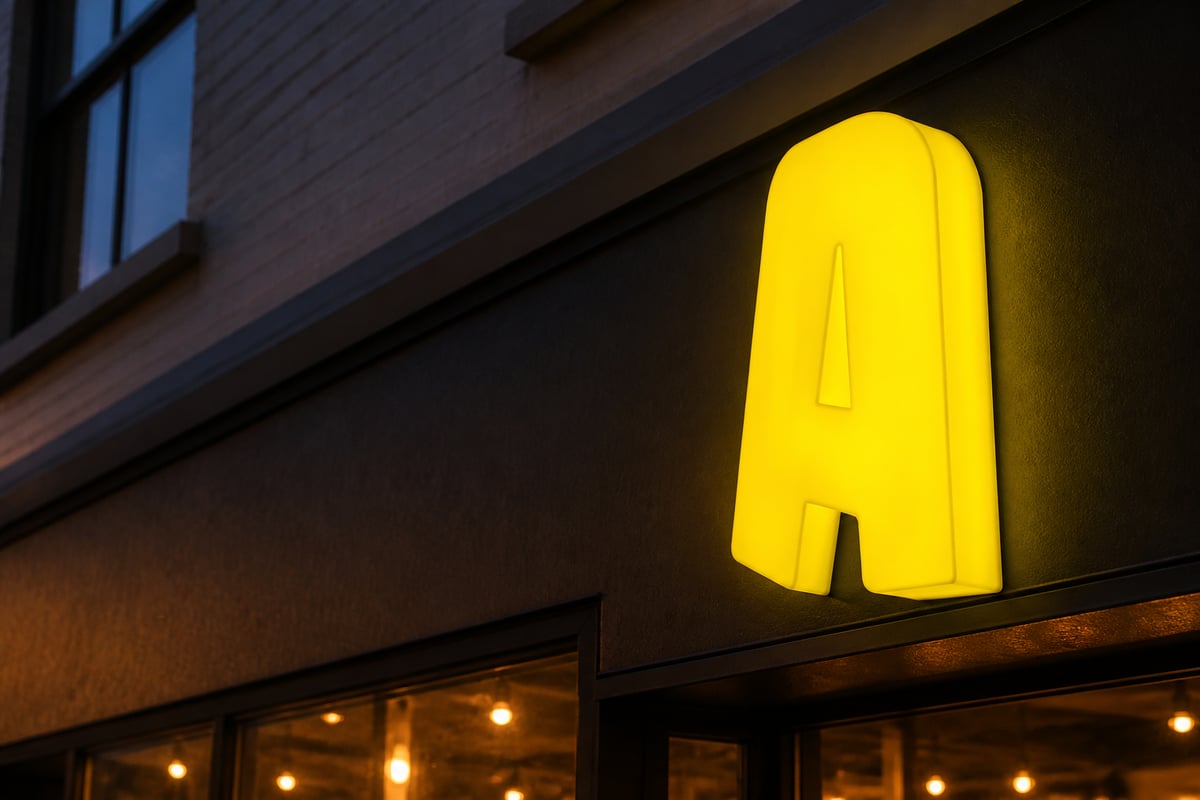
If you want solid, dimensional lettering that glows at night, fabricated 3D signage from Signshoponline covers illuminated and non-illuminated 3D channel letters, built to suit your fascia and brand.
Illuminated signs also work best as part of a wider visibility plan. Many businesses pair a lit fascia with portable teardrop banners for promotions, and with LED screens when they need changeable messages. There is useful background on how lit displays support brand awareness in Signshoponline's article on marketing your brand with LED sign displays.
Using Your Lit Signage to Support Wider Marketing
An illuminated sign is a fixed asset that works every evening, but it performs better when the rest of your marketing points back to it. Photograph the lit sign at night and use the image across your website, social profiles and local listings, so customers recognise your premises on arrival.
Tools that speed up content creation can help here. An AI marketing tool such as Holo can draft social posts and ads in your brand's tone, which is handy for announcing a new sign, a rebrand or a promotion. For customer enquiries that arrive after hours, a simple chatbot from a provider like ToolStacked can answer opening-hours and directions questions while your sign does its work outside. If you sell online as well as in store, a commerce platform such as Twinstack can keep orders, stock and customer care in one place.
Keep the message on the sign itself short. Customers read a lit sign in seconds, so a clear brand name, a simple service descriptor and good contrast matter more than detail.
Common Mistakes When Buying LED Sign Lights
Most disappointing results trace back to a handful of avoidable errors:
- Choosing on price alone. The lowest quotation often uses uncertified drivers and modules with short warranties.
- Ignoring weather exposure. An indoor-rated fixture on an exterior wall will fail early.
- Poor module spacing. Too few modules leave hotspots and shadows across the face.
- Over-bright output. Excess brightness causes glare and can attract complaints from neighbours or breach by-laws.
- No plan for access. Signs mounted high without a safe maintenance route become expensive to service.
- Skipping controls. Dimmers and timers are inexpensive to add at build stage and costly to retrofit.
Asking suppliers to explain their component ratings, warranty and installation method will expose most of these risks before you sign off.
Frequently Asked Questions
How long do LED sign lights last?
Quality LED modules are commonly rated for long lifespans, which usually means many years of nightly use. Drivers and power supplies tend to fail before the LEDs themselves, so check the warranty on both.
Are LED sign lights suitable for outdoor use?
Yes, provided the fixtures carry a suitable ingress protection rating and the sign is sealed correctly. Exposed signs generally need a higher IP rating, plus surge protection where the power supply is unstable.
Can I upgrade an existing neon or fluorescent sign to LED?
In many cases you can retrofit LED modules into an existing lightbox or channel letter housing. A signage specialist can inspect the cabinet and advise whether a retrofit or a rebuild gives the better result.
Do LED signs need planning approval?
Often they do, particularly for large, high or roadside installations. Municipal by-laws and landlord conditions vary, so confirm requirements before design is finalised.
Start by listing where your current signs sit, how they look after dark and which of them would most benefit from better lighting, then photograph each one at night for reference. When you are ready to price an upgrade, Signshoponline can help you specify and produce illuminated lettering, lightboxes and pylons that suit your premises. Request a quote for fabricated 3D signage and have your illuminated sign planned around your brand and budget.


