Instore signage represents one of the most powerful yet frequently underutilized marketing tools available to retailers today. From guiding customers through your space to promoting special offers and reinforcing brand identity, well-designed signage influences purchasing decisions at the critical moment when shoppers are ready to buy. Research consistently demonstrates that strategic signage implementation increases sales, improves customer satisfaction, and reduces staff workload by answering common questions before they're asked. Understanding how to leverage different types of instore signage effectively can transform your retail environment from merely functional into a dynamic sales-driving asset.
The Strategic Role of Instore Signage in Modern Retail
Retail environments have evolved dramatically over the past decade, yet instore signage remains a cornerstone of effective customer communication. Unlike digital advertising that competes for attention across countless channels, physical signage captures shoppers precisely when they're in buying mode, making it exceptionally valuable for conversion.
The strategic importance of instore signage extends beyond simple product labelling. According to Harvard Business Review's analysis of retail media platforms, forward-thinking retailers now view their physical spaces as advertising platforms, monetizing signage placement whilst enhancing the customer journey. This dual-purpose approach transforms signage from a cost centre into a revenue generator.
Primary Functions of Effective Signage
Instore signage serves multiple concurrent purposes within retail environments:
- Wayfinding and navigation that reduces customer frustration and abandoned searches
- Product information delivery including features, pricing, and specifications
- Promotional messaging highlighting sales, bundles, and limited-time offers
- Brand reinforcement maintaining visual consistency and company identity
- Compliance communication displaying mandatory legal notices and safety information
Each function requires different design approaches, placement strategies, and update frequencies to maximize effectiveness.
Types of Instore Signage and Their Applications
Understanding the distinct categories of instore signage enables retailers to deploy the right solution for each communication challenge. Different signage types serve specific purposes, and successful retail environments typically combine multiple formats to create a cohesive customer experience.
Wayfinding and Directional Signage
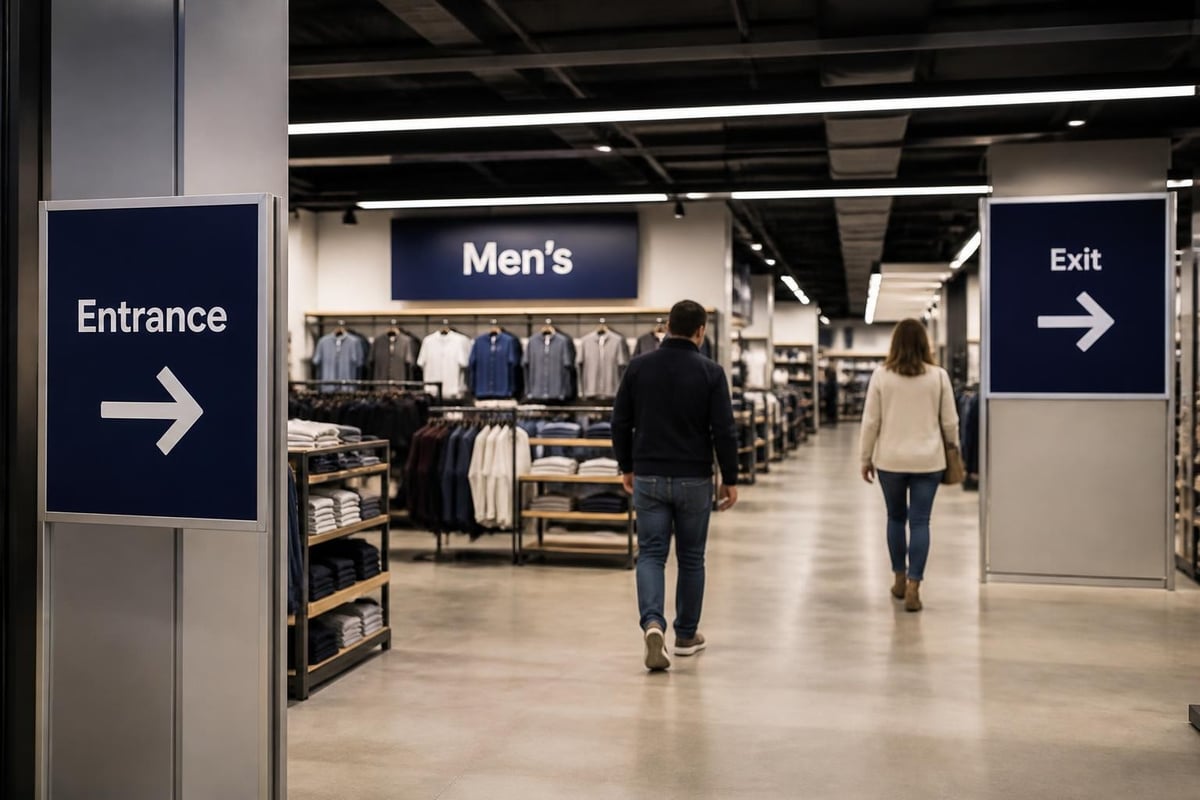
Directional signage reduces customer anxiety by providing clear navigation throughout larger retail spaces. Department markers, aisle identifiers, and facility locators help shoppers find products quickly, improving satisfaction and increasing the likelihood of purchase completion.
Accessibility signs play a particularly important role in creating inclusive retail environments. The U.S. Access Board provides comprehensive guidance on tactile and visual requirements that ensure signage serves all customers effectively, regardless of physical ability.
Promotional and Marketing Signage
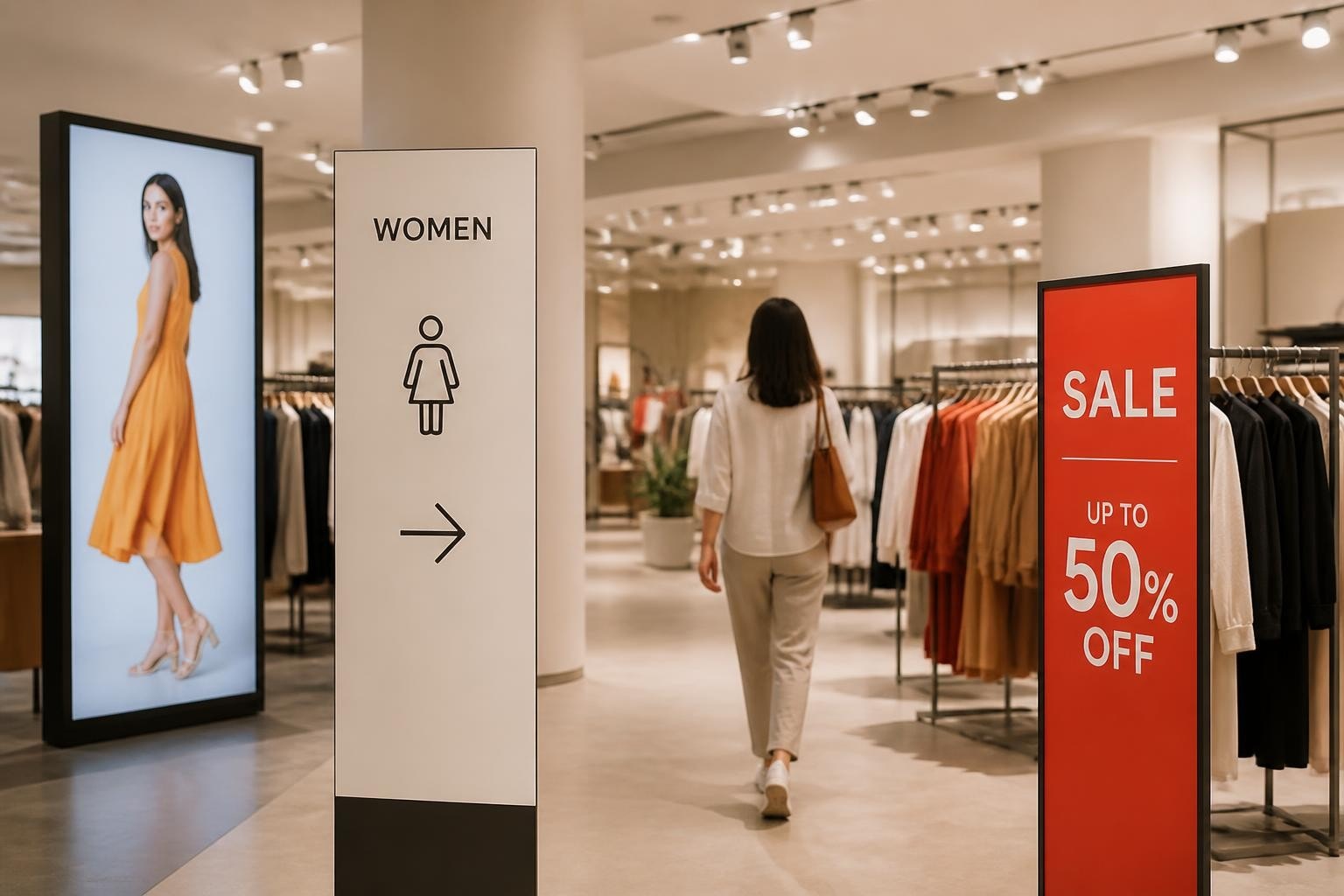
Promotional signage drives immediate sales by highlighting offers, new arrivals, and seasonal products. These signs typically feature bold colors, large typography, and compelling calls to action designed to interrupt browsing behaviour and direct attention to specific products.
Retailers frequently deploy banner stands and hanging banners for temporary campaigns, whilst permanent promotional spaces might utilize illuminated displays for maximum impact. The key advantage of physical promotional signage lies in its placement at the point of decision, where shoppers can act immediately on the offer presented.
Informational and Educational Signage
Product information signs answer customer questions, compare features, and provide usage instructions. This category proves particularly valuable in sectors like electronics, cosmetics, and home improvement, where purchase decisions depend on understanding technical specifications or application methods.
| Signage Type | Primary Purpose | Typical Lifespan | Update Frequency |
|---|---|---|---|
| Wayfinding | Navigation | Permanent | Rarely (layout changes only) |
| Promotional | Drive sales | Temporary | Weekly to monthly |
| Informational | Educate customers | Semi-permanent | Quarterly to annually |
| Compliance | Legal requirements | Permanent | As regulations change |
Design Principles for High-Performance Instore Signage
Creating effective instore signage requires balancing aesthetics with functionality. Poor design diminishes impact regardless of placement, whilst well-crafted signage communicates clearly even in challenging environments.
Visual Hierarchy and Readability
The most successful signage establishes clear visual hierarchy through strategic use of size, color, and contrast. Primary messages should be readable from the maximum intended viewing distance, with supporting information accessible upon closer inspection.
Typography selection significantly impacts readability. Sans-serif fonts generally perform better in retail environments, particularly for wayfinding and promotional applications. Character spacing, line height, and color contrast all contribute to legibility under varying lighting conditions.
Retail Customer Experience research confirms that simple, focused messaging outperforms cluttered designs with multiple competing elements. The most effective instore signage communicates a single primary message supplemented by minimal supporting information.
Brand Consistency Across Touchpoints
Instore signage must align with broader brand guidelines to create cohesive customer experiences. Consistent use of colors, fonts, imagery styles, and tone of voice reinforces brand recognition and builds trust through visual familiarity.
Retailers operating multiple locations face additional challenges maintaining consistency. Standardized templates, centralized production, and clear brand guidelines help ensure that signage in Manchester communicates the same brand identity as displays in Cardiff or Edinburgh.
Material Selection and Durability
Different retail environments demand different material choices. High-traffic areas require durable substrates that withstand constant exposure, whilst temporary promotional signage might utilize more economical materials for short-term campaigns.
Common material options include:
- Foamboard for lightweight, economical temporary displays
- Acrylic for premium appearance and durability
- Aluminium composite for outdoor-quality internal applications
- Vinyl for versatile, easily updated graphic surfaces
- Illuminated substrates for maximum visibility and premium positioning

Strategic Placement and Positioning
Even perfectly designed instore signage fails when poorly positioned. Strategic placement considers customer sight lines, traffic patterns, and decision-making moments to maximize impact and return on investment.
Customer Journey Mapping
Effective signage placement begins with understanding how customers move through your space. Entrance zones, decision points, queue areas, and checkout environments each present distinct opportunities for targeted messaging.
The entrance zone sets expectations and provides initial orientation. Wayfinding signage here prevents confusion and establishes positive first impressions. Mid-store positioning targets active shoppers comparing options, whilst checkout signage capitalizes on captive audiences waiting in queue.
Eye-Level Optimization
The principle "eye level is buy level" applies equally to signage as to product placement. Signs positioned within the average customer's natural sight line (approximately 150-170cm from floor level) receive maximum attention with minimum effort.
However, this standard requires adjustment based on viewing distance. Overhead signage viewed from several meters away may sit 3-4 meters above floor level whilst remaining within the natural sight cone. Understanding viewing angles and distances enables optimal height selection for each application.
High-Traffic Versus Decision Zones
Different zones within retail environments serve different purposes:
- High-traffic corridors: Wayfinding and brand messaging
- Decision zones: Product information and comparison data
- Impulse areas: Promotional offers and limited-time deals
- Queue zones: Entertainment, brand storytelling, and last-minute promotions
Matching message type to location context significantly improves effectiveness and customer response rates.
Digital Versus Traditional Instore Signage
The rise of digital displays has transformed instore signage possibilities, yet traditional static signs maintain important advantages. Understanding when to deploy each format optimizes budget allocation and communication effectiveness.
Digital Signage Benefits and Applications
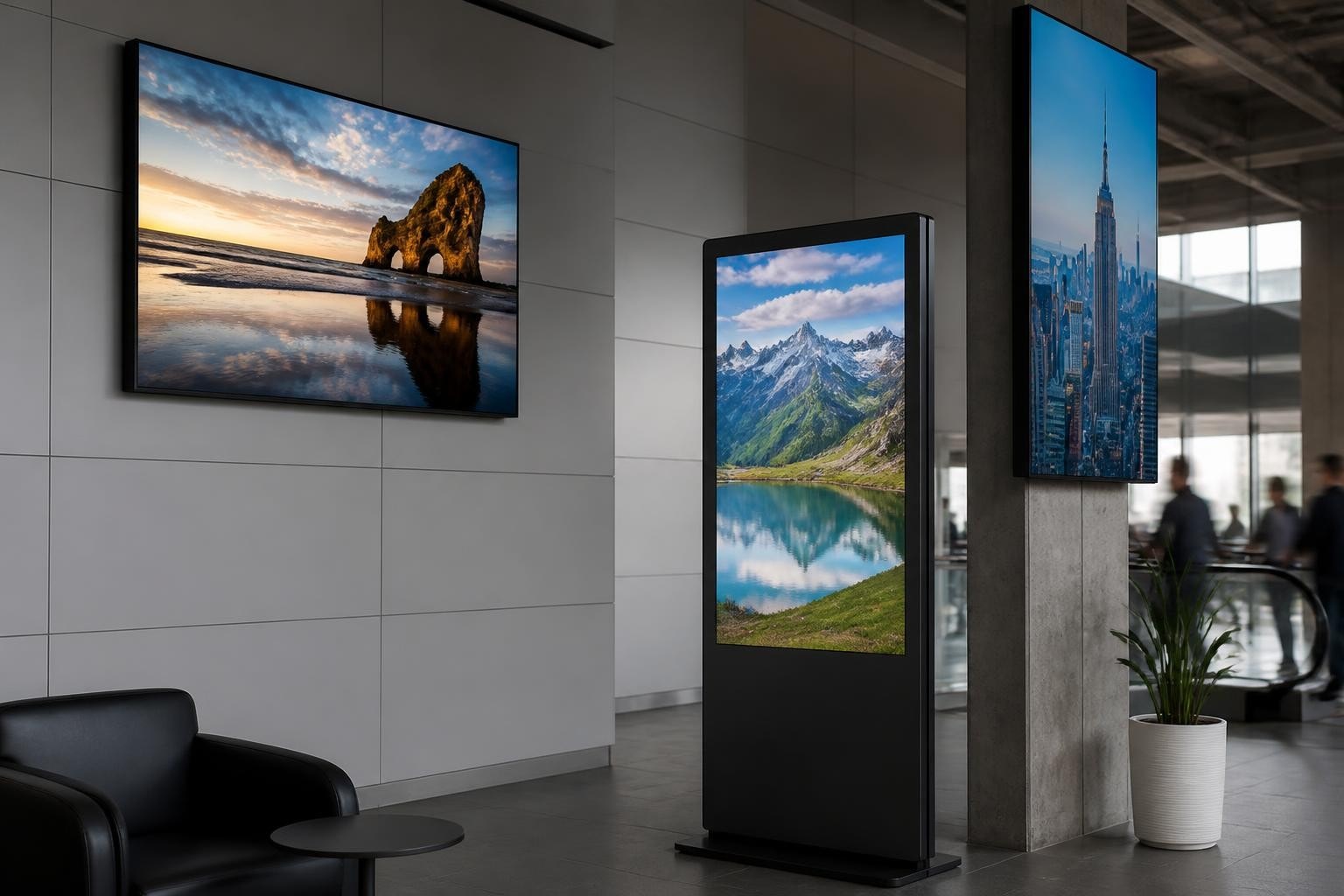
Digital screens offer unmatched flexibility for retailers managing multiple locations or frequently changing promotions. Content updates happen instantly across networked displays, eliminating printing costs and distribution delays whilst enabling dayparting (showing different messages at different times).
Recent benchmark data reveals that retailers increasingly view digital signage as essential infrastructure rather than experimental technology. The ability to test messages, display video content, and react to inventory levels in real-time provides competitive advantages impossible with static displays.
Digital signage particularly excels in menu board applications, where product availability, pricing, and promotional status change frequently. Restaurants, cafes, and food retail environments benefit enormously from menu boards that update instantly without production delays.
When Traditional Signage Outperforms Digital
Despite digital advancement, traditional instore signage maintains distinct advantages in specific applications. Static signs require no power supply, involve zero ongoing content management, and deliver consistent messaging without technical failure risks.
Traditional signage proves superior for:
- Permanent wayfinding and department identification
- Legal compliance notices requiring static display
- Brand statements and mission communications
- Budget-conscious implementations with infrequent updates
- Environments where power access or wireless connectivity proves challenging
Many retailers achieve optimal results through hybrid approaches, deploying digital screens for dynamic promotional content whilst maintaining traditional signage for stable navigational and compliance needs.
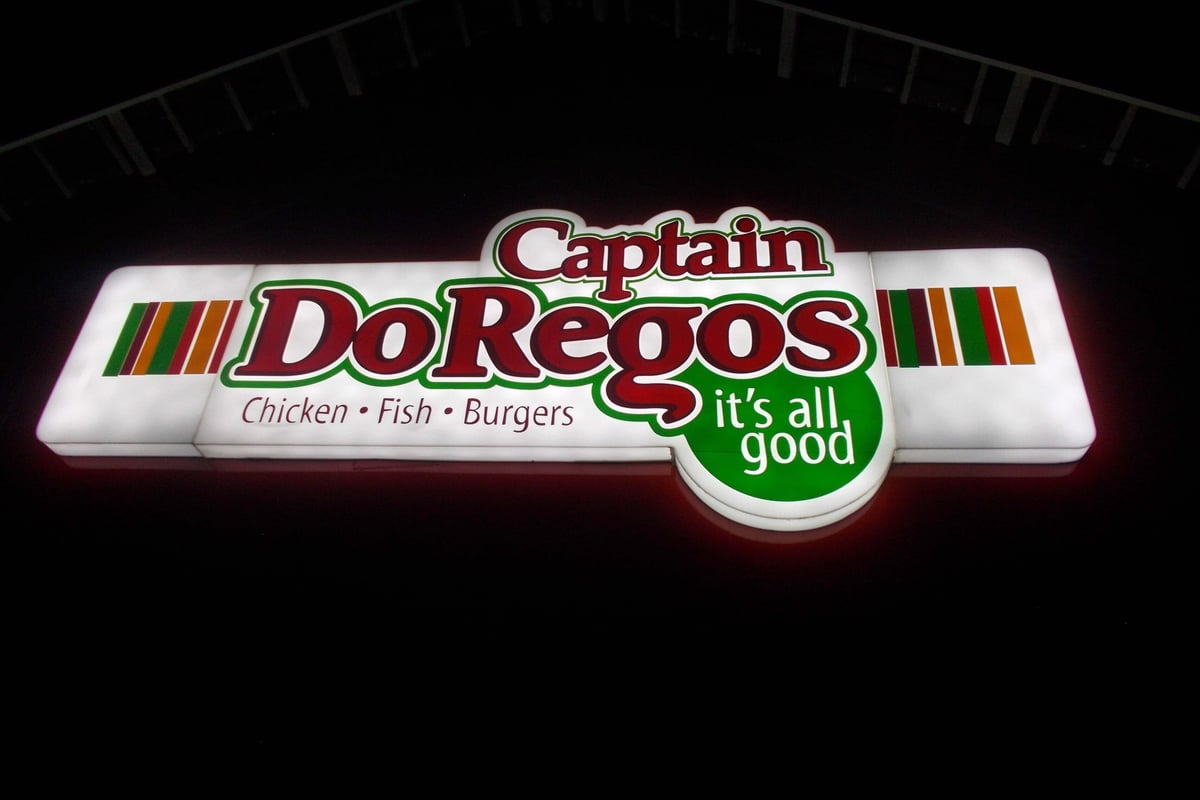
For retailers seeking maximum impact with minimal ongoing costs, lightbox signage provides an excellent middle ground between purely static displays and fully digital solutions. Illuminated signage delivers the visual prominence of digital screens whilst maintaining the reliability and simplicity of traditional printed graphics. Premium lightbox solutions allow straightforward graphic updates without electrical expertise, combining the best aspects of both approaches.
Measuring Instore Signage Effectiveness
Investment in instore signage demands measurable returns. Establishing clear metrics and tracking performance enables continuous optimization and justifies ongoing expenditure to stakeholders.
Quantitative Performance Indicators
Several metrics provide objective evidence of signage effectiveness:
| Metric | Measurement Method | What It Reveals |
|---|---|---|
| Product lift | Sales comparison before/after signage installation | Direct revenue impact |
| Customer queries | Staff-reported question reduction | Information effectiveness |
| Dwell time | Video analytics or mobile tracking | Engagement levels |
| Conversion rate | POS data linked to signage location | Purchase influence |
| Foot traffic patterns | Heat mapping or counting sensors | Navigation success |
Retailers should establish baseline measurements before implementing new signage programmes, enabling accurate before-and-after comparisons that demonstrate genuine impact rather than coincidental correlation.
Qualitative Assessment Methods
Numbers tell part of the story, but qualitative feedback provides context and identifies improvement opportunities. Customer interviews, staff observations, and photographic documentation reveal how signage functions in real-world conditions.
Mystery shopping exercises specifically focused on signage navigation prove particularly valuable. Observing how unfamiliar shoppers interact with wayfinding, whether they notice promotional displays, and where confusion occurs identifies design weaknesses before they impact broader customer populations.
Compliance and Accessibility Considerations
Instore signage must satisfy legal requirements whilst serving diverse customer needs. Failure to address compliance obligations exposes retailers to liability whilst excluding potential customers from full store access.
Legal Requirements and Standards
The ADA Title III primer outlines obligations for public accommodations, including specific signage requirements for accessible routes, facilities, and services. Retailers operating in multiple jurisdictions must understand applicable standards in each location, as requirements vary significantly between countries and regions.
Beyond disability access, signage may require specific content depending on sector. Fire safety notices, emergency exit identification, and hazard warnings carry legal mandates with prescribed formats, sizes, and placement rules.
Universal Design Principles
Creating signage that serves all customers regardless of ability represents both ethical responsibility and commercial opportunity. SEGD's accessible design task force provides professional guidance on implementing universal design principles that enhance usability for everyone.
Key accessibility considerations include:
- Contrast ratios meeting minimum standards for visual impairment
- Tactile elements for wayfinding and facility identification
- Placement heights accommodating wheelchair users and varying statures
- Pictogram clarity supporting those with limited language proficiency
- Braille integration for essential navigational information
Accessible design benefits extend beyond disabled populations. Clear, high-contrast signage with intuitive icons helps elderly shoppers, young children, tourists with limited language skills, and anyone operating in unfamiliar environments.
Maintenance and Lifecycle Management
Instore signage effectiveness deteriorates without proper maintenance. Faded graphics, damaged substrates, and outdated information undermine brand perception and customer trust, making lifecycle management essential to ongoing success.
Inspection Schedules and Replacement Planning
Proactive inspection identifies issues before they impact customer experience. Monthly walk-throughs document condition, noting fading, physical damage, soiling, and outdated content. This systematic approach enables planned replacement rather than reactive responses to failures.
Different signage types require different inspection frequencies:
- Illuminated displays: Monthly checks of bulbs, transformers, and housing integrity
- Window graphics: Quarterly assessment for fading, peeling, and adhesion failure
- Promotional banners: Weekly verification of relevance and condition during campaigns
- Permanent wayfinding: Annual comprehensive reviews aligned with store layout audits
Update Processes and Version Control
Retailers operating multiple locations face particular challenges maintaining signage currency across sites. Centralized design libraries, version control systems, and rollout schedules prevent inconsistencies that confuse customers visiting different branches.
Digital asset management platforms enable local managers to customize approved templates whilst maintaining brand consistency. This balanced approach accommodates local requirements without sacrificing visual coherence across the broader network.
Budget Allocation and Return on Investment
Strategic instore signage programmes require financial commitment, yet modest investments often generate disproportionate returns when well-executed. Understanding cost structures and expected outcomes enables informed budget allocation.
Cost Factors and Investment Planning
Instore signage costs vary dramatically based on substrate selection, production method, installation complexity, and order volume. Simple printed posters cost pennies per unit, whilst premium reception signs might represent significant capital expenditure.
Budget considerations include:
- Initial design and artwork development
- Production costs varying by material, size, and quantity
- Installation expenses including labour and specialized equipment
- Ongoing maintenance and cleaning requirements
- Replacement cycles based on expected lifespan
Bulk production typically reduces per-unit costs significantly. Retailers planning chain-wide rollouts should consolidate orders whilst maintaining sufficient buffer stock for replacements and new locations.
Calculating Signage ROI
Return on investment calculations compare signage costs against measurable business outcomes. The simplest approach tracks sales lift for promoted products, attributing a portion of increased revenue to the signage intervention.
More sophisticated analyses incorporate multiple factors including reduced staff time answering questions, improved customer satisfaction scores, and enhanced brand perception metrics. Whilst some benefits prove difficult to quantify precisely, comprehensive ROI models provide clearer pictures of signage programme value than production costs alone.
Seasonal and Campaign-Specific Signage Strategies
Retail calendars demand flexible signage approaches that accommodate promotional cycles, seasonal events, and limited-time campaigns without disrupting permanent wayfinding infrastructure.
Planning Seasonal Transitions
Major retail seasons (Christmas, Easter, summer holidays, back-to-school) require advance planning to ensure timely signage deployment. Production lead times, installation scheduling, and staff training must align with campaign launch dates to maximize impact.
Successful seasonal programmes typically involve:
- Design finalization eight to twelve weeks before launch
- Production completion four to six weeks prior
- Distribution to locations two to three weeks ahead
- Installation one week before campaign starts
- Removal and storage immediately following season conclusion
Reusable seasonal signage reduces costs and environmental impact. Durable substrates with timeless seasonal messaging provide multi-year service when properly stored between deployments.
Limited-Time Promotional Execution
Flash sales, product launches, and event-driven promotions operate on compressed timelines that challenge traditional signage production cycles. Quick-turn solutions like teardrop banners enable rapid deployment without sacrificing visual impact.
Digital signage provides ultimate flexibility for time-sensitive campaigns, updating instantly across locations. However, combining digital promotional messaging with supporting traditional retail signs creates fuller sensory experiences that drive stronger customer response than either approach alone.
Integration with Broader Marketing Strategy
Instore signage achieves maximum effectiveness when coordinated with digital marketing, advertising, and public relations efforts. Disconnected messaging across channels confuses customers and dilutes brand impact.
Omnichannel Consistency
Customers experience brands across multiple touchpoints before, during, and after store visits. Signage messaging should align with current advertising campaigns, social media content, and email marketing to create coherent narratives that reinforce rather than contradict each other.
Visual consistency proves equally important. Color schemes, typography, imagery styles, and tone of voice should translate seamlessly from digital channels into physical retail environments. This consistency builds trust through familiarity whilst strengthening brand recognition.
Supporting Online-to-Offline Customer Journeys
Modern retail increasingly involves online research followed by in-store purchase. Signage can facilitate these hybrid journeys by highlighting products frequently researched online, displaying customer reviews gathered digitally, and providing QR codes linking to extended product information.
The inverse journey (in-store browsing followed by online purchase) also benefits from supportive signage. Clear product identification, prominent SKU displays, and mobile-friendly product locators help customers find items online after encountering them physically.
Strategic instore signage transforms retail environments into powerful sales tools whilst enhancing customer experience through clear communication and intuitive navigation. By understanding the diverse roles signage plays, selecting appropriate formats for specific applications, and maintaining consistent quality across your estate, you create retail spaces that serve customers effectively whilst driving measurable business results. Whether you're refreshing a single location or rolling out chain-wide standards, Signshoponline delivers comprehensive signage solutions from concept through installation, ensuring your retail environment communicates with clarity, consistency, and commercial impact.