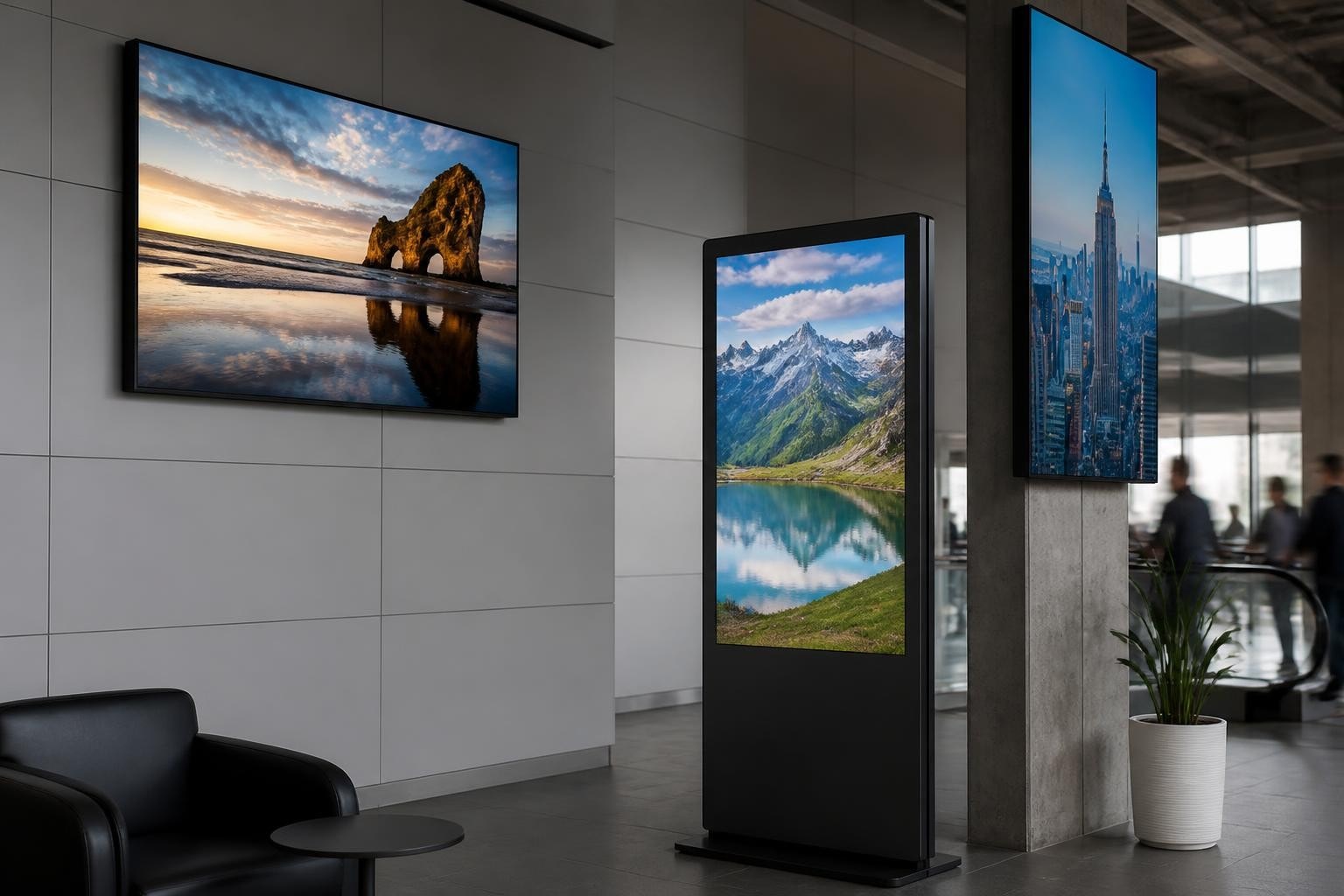
The retail landscape has transformed dramatically over the past decade, with physical stores evolving from simple product display spaces into immersive brand experiences. At the heart of this transformation lies retail digital signage, a technology that has shifted from novel marketing tool to essential infrastructure. Today's consumers expect dynamic, personalised, and engaging content throughout their shopping journey, and forward-thinking retailers are responding by deploying intelligent display networks that blend information, entertainment, and promotion. As we move through 2026, the integration of digital displays with artificial intelligence, real-time data feeds, and omnichannel strategies has made retail digital signage one of the most powerful tools for driving engagement and revenue.
The Evolution of In-Store Communication
Traditional static signage served retailers well for decades, but the limitations became increasingly apparent as consumer behaviour evolved. Printed posters required manual updates, seasonal campaigns demanded complete replacements, and time-sensitive promotions often became outdated before staff could remove them. Retail digital signage addresses these pain points whilst introducing capabilities that static media simply cannot match.
Dynamic Content Management
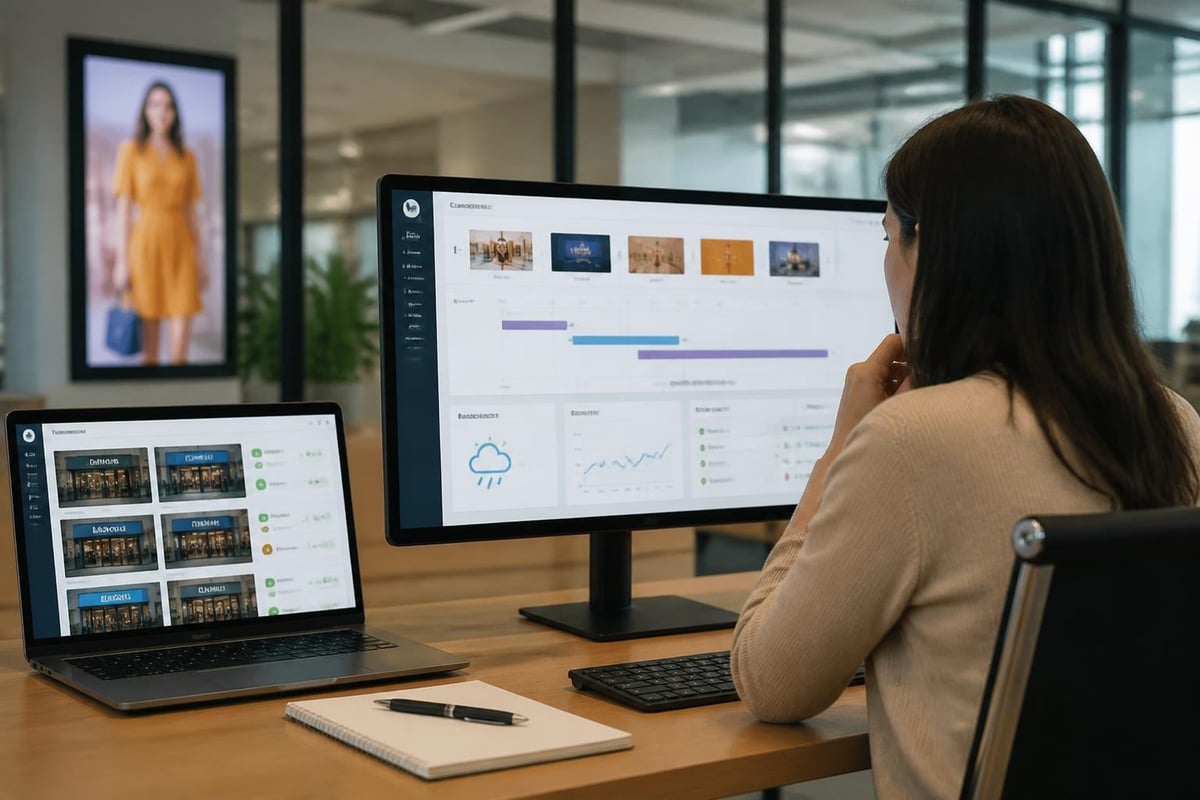
Modern retail digital signage systems enable retailers to update content across single screens or entire networks within minutes. A clothing retailer can promote winter coats during a cold snap, switch to rainwear when forecasts predict storms, and highlight clearance items when footfall drops below targets. This agility transforms how stores respond to market conditions, competitor actions, and inventory challenges.
Content management platforms now offer sophisticated scheduling tools that automate much of this process. Retailers can plan campaigns weeks in advance, set triggers based on data feeds, and ensure consistency across multiple locations whilst allowing for local customisation when needed.
Integration With Retail Systems
The true power of retail digital signage emerges when displays connect to broader retail infrastructure. Point-of-sale systems, inventory management platforms, customer relationship management tools, and footfall analytics all generate valuable data that can inform what appears on screens.
| Integration Type | Data Source | Display Application |
|---|---|---|
| Inventory | Stock management system | Real-time product availability, low-stock alerts, clearance promotions |
| Customer | CRM and loyalty programmes | Personalised greetings, reward balances, targeted offers |
| Traffic | Footfall sensors and cameras | Queue management, directional guidance, staffing alerts |
| External | Weather, events, social media | Contextual product recommendations, trending items, live feeds |
This connected approach ensures that retail digital signage serves strategic business objectives rather than simply displaying marketing messages. When a popular item runs low, the system can automatically promote alternative products. When queues build at checkout, screens can direct customers to self-service options or highlight impulse purchase items.
Strategic Placement and Format Selection
Location determines the effectiveness of any retail digital signage installation. Different zones within a store serve distinct purposes, and screen placement should reflect customer behaviour patterns and decision-making processes.
Window displays capture attention from passing pedestrians and vehicle traffic. High-brightness screens visible in direct sunlight showcase hero products, announce sales events, and communicate brand identity. These installations compete with urban visual clutter, requiring bold content and sufficient size to cut through noise.
Entrance zones welcome customers and set expectations for the visit. Digital directories help navigate larger stores, promotional highlights communicate current campaigns, and brand storytelling content establishes atmosphere. Research from Deloitte's connected store analysis demonstrates how these high-tech touchpoints shape the entire shopping experience from the first moments.
Aisle endcaps have traditionally been premium promotional space, and retail digital signage amplifies their impact. Dynamic endcap displays can rotate through multiple products, show demonstration videos, and even respond to which customers approach based on demographic detection or loyalty app integration.
Format Considerations
Retail digital signage encompasses diverse formats beyond standard rectangular screens:
- Video walls create impactful focal points in flagship stores
- Shelf-edge displays deliver product information at point of decision
- Interactive kiosks enable product exploration and self-service
- Digital menu boards streamline ordering in food retail
- Wayfinding totems assist navigation in large format stores
- Queue management screens reduce perceived wait times
Each format demands specific content strategies, viewing distances, and interaction models. A shelf-edge display showing nutritional information requires different content depth than a large-format brand storytelling video wall.
Content Strategy and Creative Execution
Hardware capability means little without compelling content. The most effective retail digital signage implementations follow clear content principles that respect attention spans, viewing contexts, and customer journeys.
The Five-Second Rule
Most retail environments involve customers in motion, browsing, and making rapid decisions. Content must communicate key messages within five seconds maximum. This demands:
- Clear hierarchies with one primary message per screen
- Bold typography readable from intended viewing distances
- High-contrast colour schemes that work under store lighting
- Minimal text focusing on benefits rather than features
- Strong calls to action that guide next steps
Motion naturally draws attention, but excessive animation creates visual fatigue. The most sophisticated retail digital signage balances dynamic elements with clarity, using movement purposefully rather than constantly.

Content Rotation and Freshness
Even the most creative content loses impact through repetition. Shoppers who visit weekly will quickly tire of seeing identical loops. Successful retailers maintain content calendars that balance consistency with variety.
A fashion retailer might operate on these rotation cycles:
- Daily: Special offers, weather-triggered suggestions, inventory-driven promotions
- Weekly: New arrival highlights, styling inspiration, seasonal trend updates
- Monthly: Brand storytelling, sustainability initiatives, community involvement
- Seasonal: Major campaign launches, holiday themes, clearance events
This layered approach ensures regular customers encounter fresh content whilst maintaining recognisable brand identity and messaging frameworks.
Measuring Performance and Return on Investment
The digital nature of retail digital signage enables measurement capabilities impossible with traditional media. Retailers can track not just impressions but actual business impact through multiple methodologies.
Attribution Studies
Large-scale research spanning four years has demonstrated measurable sales lift from in-store digital signage implementations. These randomised controlled studies compare matched stores with and without displays, isolating the impact of digital content on purchase behaviour. The evidence shows consistent performance improvements across categories, with particularly strong results for impulse purchases and premium products.
Analytics Integration
Modern retail digital signage platforms offer sophisticated analytics that go beyond simple view counts:
- Dwell time measurement tracks how long customers engage with content
- Demographic detection estimates age and gender of viewers
- Attention mapping identifies which content elements draw focus
- Conversion tracking links screen exposure to transaction data
- A/B testing compares content variants for effectiveness
This data transforms retail digital signage from a broadcast medium into a responsive system that learns and optimises over time.
| Metric | Measurement Method | Business Application |
|---|---|---|
| Impressions | Camera-based counting | Reach and frequency planning |
| Engagement | Dwell time sensors | Content effectiveness scoring |
| Conversion | POS data correlation | Direct sales attribution |
| Cost per acquisition | Total investment ÷ attributed sales | Budget optimisation |
The ability to demonstrate return on investment has accelerated retail digital signage adoption across sectors, with retail trends for 2025 and beyond highlighting digital in-store experiences as a core investment priority.
Accessibility and Regulatory Compliance
Retail environments must serve all customers, and retail digital signage implementations carry specific accessibility obligations. The technical guidance on accessible signage provides essential frameworks for ensuring digital displays meet regulatory requirements whilst serving diverse customer needs.
Design Considerations
Text readability requires sufficient size, contrast, and font selection. Sans-serif typefaces generally perform better on screens, and contrast ratios should exceed 4.5:1 for body text and 3:1 for large text. Colour should never serve as the sole differentiator for important information.
Audio content demands captioning for deaf and hard-of-hearing customers. Many retailers opt for visual-only content to avoid audio conflicts and maintain pleasant store atmospheres, but when sound is used, captions must be clear and synchronised.
Flashing and motion can trigger seizures in susceptible individuals. Content should avoid flashing more than three times per second, and rapid motion should be limited to non-essential decorative elements.
Wayfinding and Information Access
Beyond promotional content, retail digital signage often serves crucial wayfinding and informational functions. Interactive kiosks must support screen reader compatibility, provide sufficient time for interactions, and offer alternative input methods for customers with mobility limitations.
Store directories and product finders should include high-contrast modes, text size adjustments, and simplified navigation paths that don't assume familiarity with digital interfaces. Traditional signage solutions like directional signs remain important complements to digital systems, ensuring redundancy and serving customers who prefer non-digital wayfinding.
Hardware Selection and Installation
The technical infrastructure supporting retail digital signage significantly impacts both upfront investment and long-term performance. Choosing appropriate hardware requires balancing capability, durability, energy efficiency, and total cost of ownership.
Display Technology
LCD panels dominate the retail digital signage market due to cost-effectiveness and proven reliability. Commercial-grade displays differ substantially from consumer televisions, offering higher brightness (typically 400-700 nits for indoor use, 2500+ nits for window-facing installations), extended operating hours (16-24 hours daily), and improved thermal management.
LED walls provide superior brightness and flexibility for large-format installations. Modular construction enables custom sizes and shapes, whilst high pixel densities now rival LCD clarity at typical viewing distances. LED technology suits flagship stores and high-impact locations where investment can be justified.
OLED displays deliver exceptional contrast and colour accuracy but carry premium pricing and potential burn-in concerns with static content elements. Their application in retail digital signage remains limited to specific luxury retail scenarios where image quality justifies the cost.
Energy consumption represents a significant ongoing expense. Energy Star certified signage displays typically consume 30-60% less power than standard commercial displays whilst maintaining comparable performance. Over a five-year deployment, energy savings can offset higher initial purchase costs.
For retailers looking to expand their illuminated signage capabilities beyond digital displays, Lightbox Signage offers a cost-effective solution for static branded messaging that complements digital installations whilst reducing energy consumption and content management requirements.
Media Players and Content Delivery
The hardware driving content to displays ranges from basic media players to sophisticated edge computing devices:
- System-on-chip (SoC) displays integrate media players directly into screens, reducing hardware complexity and failure points
- Standalone media players offer greater processing power for interactive content, multiple-zone layouts, and advanced triggering
- Cloud-based systems stream content from central servers, enabling real-time updates but requiring reliable network connectivity
- Hybrid approaches cache content locally whilst syncing with cloud management platforms
Network architecture determines update speed, content quality, and system resilience. Retailers must balance centralised control with local redundancy to ensure displays continue functioning during network outages.
Content Creation and Workflow Management
Producing effective retail digital signage content demands different skills and processes than traditional marketing materials. Successful retailers either develop in-house capabilities or partner with specialist content creators who understand the medium's unique requirements.
In-House vs. Outsourced Production
In-house teams offer agility and deep brand knowledge. Retailers can respond quickly to market changes, test ideas rapidly, and maintain tight control over messaging. However, building internal expertise requires investment in software tools, training, and creative talent.
Agency partnerships provide professional production quality and fresh perspectives. Specialist agencies understand technical specifications, possess advanced motion graphics capabilities, and can deliver polished campaigns. The trade-off involves longer lead times and higher per-asset costs.
Many retailers adopt a hybrid model: agencies create hero content for major campaigns, whilst in-house teams handle daily promotions, product highlights, and tactical messages. This approach balances quality with responsiveness.
Asset Libraries and Templates
Maintaining consistency across multiple locations and content types requires structured asset management:
- Brand guidelines defining colour palettes, typography, logo usage, and tone
- Template libraries enabling rapid creation of common content types
- Asset databases organising product images, video clips, and graphic elements
- Approval workflows ensuring content meets standards before publication
- Version control tracking changes and enabling rollback if needed
The investment in these systems pays dividends through faster production cycles, improved consistency, and reduced errors.
Integration With Broader Marketing Strategies
Retail digital signage performs best when aligned with omnichannel marketing efforts rather than operating in isolation. The most sophisticated implementations create seamless experiences across digital and physical touchpoints.
Campaign Coordination
A clothing retailer launching a new collection might coordinate:
- Social media teasers building awareness in the weeks before launch
- Email campaigns notifying loyal customers of early access
- Website content showcasing the full range with styling suggestions
- Window displays featuring key pieces to attract passing traffic
- In-store retail digital signage highlighting collection stories and promoting fitting room visits
- Point-of-sale materials reinforcing messages at decision points
Each channel plays a distinct role, with retail digital signage bridging online engagement and in-store conversion. Customers who encountered the collection on Instagram should feel continuity when entering the physical store and seeing consistent messaging on digital displays.
Customer Journey Mapping
Understanding how customers move through stores enables strategic screen placement and content sequencing. Entry displays might focus on awareness and inspiration, mid-store screens on consideration and education, and checkout-area displays on cross-selling and loyalty programme enrolment.
Insights from Harvard Business Review's research on high-tech touchpoints demonstrate how thoughtfully designed digital experiences enhance overall satisfaction whilst driving measurable business outcomes.
Future Developments and Emerging Technologies
Retail digital signage continues evolving rapidly, with several technologies poised to reshape capabilities over the coming years.
Artificial Intelligence and Personalisation
Machine learning algorithms can analyse customer demographics, predict preferences, and serve tailored content in real-time. A screen might display premium products to affluent-looking shoppers whilst highlighting value ranges to budget-conscious customers. Whilst privacy concerns require careful navigation, the potential for relevance-driven content is substantial.
Computer vision enables understanding of customer behaviour beyond basic demographics. Systems can detect whether someone is browsing casually or searching purposefully, adjusting content accordingly. Queue detection can trigger additional checkout opening messages or highlight self-service options.
Augmented Reality Integration
AR-enabled retail digital signage allows customers to visualise products in context. Furniture retailers can show how a sofa might look in a customer's living room, cosmetics brands can enable virtual try-ons, and fashion retailers can demonstrate styling combinations. These experiences bridge the gap between online visualisation tools and physical product inspection.
Sustainability Initiatives
Environmental considerations increasingly influence purchasing decisions. Retail digital signage can communicate sustainability credentials, explain recycling programmes, and promote eco-friendly products. The technology itself must also align with green objectives through energy-efficient hardware, responsible content strategies that avoid unnecessary updates, and end-of-life recycling programmes.
Solar-powered outdoor displays and ultra-low-power e-paper screens represent emerging options for retailers committed to reducing environmental impact whilst maintaining effective customer communication.
Operational Considerations and Best Practices
Successful retail digital signage deployments extend beyond initial installation to encompass ongoing management, maintenance, and optimisation.
Maintenance and Support
Preventive maintenance schedules should include screen cleaning, ventilation inspection, cable checking, and software updates. Commercial displays typically require quarterly attention, with daily monitoring for operational issues.
Remote management capabilities enable IT teams to diagnose problems, update software, and restart devices without visiting physical locations. This dramatically reduces downtime and support costs across multi-site deployments.
Content Governance
Clear policies prevent common issues:
- Brand standards ensure visual consistency
- Approval processes catch errors before publication
- Update schedules prevent conflicting or outdated content
- Crisis protocols enable rapid response to recalls, emergencies, or PR situations
- Compliance reviews verify regulatory adherence
Governance structures should balance control with agility, enabling local teams to respond to market conditions whilst maintaining brand integrity.
Training and Adoption
Staff must understand how retail digital signage supports their objectives rather than viewing it as impersonal automation. Training programmes should cover:
- How content updates work and who to contact with requests
- Ways to use displays as sales tools during customer interactions
- Emergency procedures if technical issues arise
- Performance data and how it informs future content
When employees feel ownership of digital signage systems, they become advocates who maximise the technology's potential.
Retail digital signage has evolved from a novel marketing tool to an essential infrastructure for modern stores, enabling dynamic content, data-driven personalisation, and measurable business impact. By thoughtfully integrating displays with broader retail systems, creating compelling content that respects customer attention, and measuring performance rigorously, retailers can transform in-store experiences whilst driving tangible commercial outcomes. Whether you're exploring your first digital installation or expanding an existing network, Signshoponline offers comprehensive digital signage solutions alongside traditional options like banners and vehicle branding to meet your complete retail communication needs.