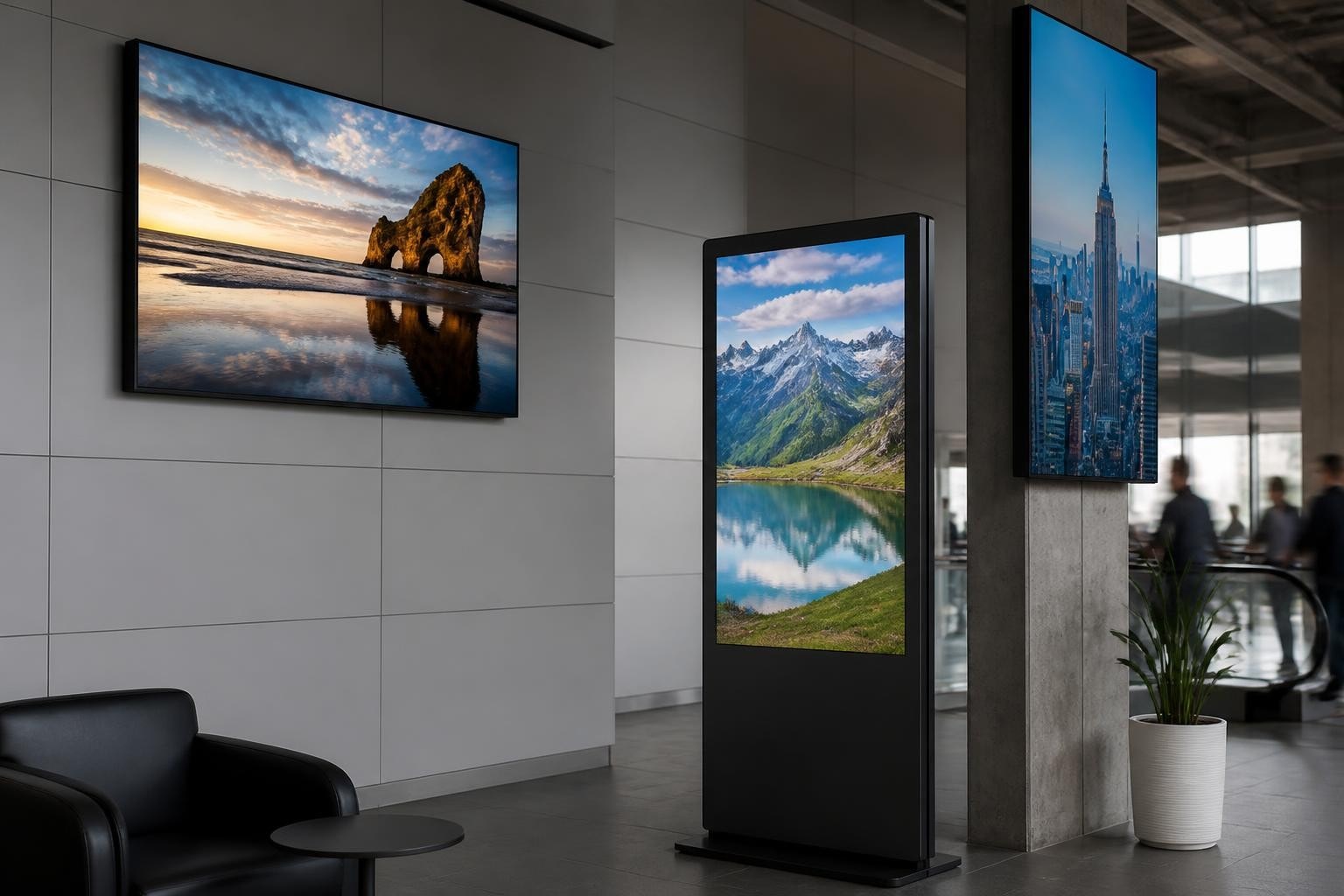
The landscape of digital signage products has evolved dramatically over the past decade, transforming from simple LED displays into sophisticated communication ecosystems. Today's digital signage products encompass far more than screens: they include content management platforms, media players, interactive touchpoints, sensors, and cloud-based analytics tools that work together to deliver targeted messaging across diverse environments. Whether you're equipping a retail store, corporate lobby, restaurant, or outdoor advertising space, understanding the full spectrum of available products is essential for making informed investment decisions that deliver measurable results.
Understanding the Core Components of Digital Signage Products
Digital signage products function as integrated systems rather than standalone devices. A typical deployment requires several key components working in harmony.
Display Hardware Options
The display itself remains the most visible element of any digital signage installation. LED displays dominate outdoor environments and large-format applications, offering exceptional brightness levels that remain visible in direct sunlight. These displays range from fine-pitch LED walls suitable for indoor viewing distances to larger-pitch modules designed for billboard-scale installations.
LCD panels represent the most common choice for indoor digital signage products, available in sizes from 32 inches to 98 inches and beyond. Commercial-grade LCD displays differ significantly from consumer televisions, featuring:
- Extended operating hours (16-24 hours daily versus 8 hours for consumer models)
- Enhanced brightness levels (500-700 nits compared to 300-400 nits)
- Improved thermal management systems
- Landscape and portrait orientation support
- Longer warranty periods and manufacturer support cycles
For businesses requiring illuminated signage solutions, combining traditional lightbox technology with digital displays creates hybrid installations that maximize impact whilst maintaining brand consistency.
Transparent OLED displays have emerged as premium digital signage products for retail environments, allowing customers to view merchandise behind the screen whilst displaying promotional content. These installations command attention but require careful content design to balance transparency with message clarity.
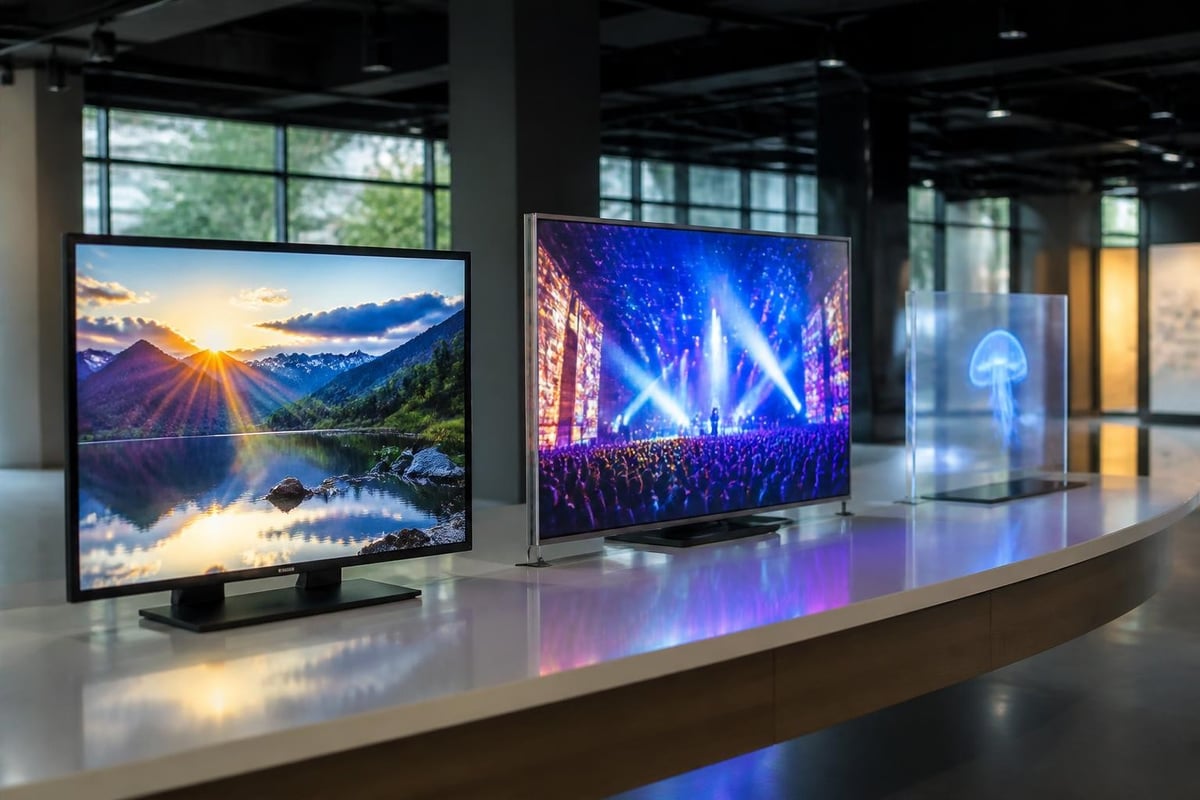
| Display Type | Typical Brightness | Best Environment | Lifespan | Price Point |
|---|---|---|---|---|
| Commercial LCD | 500-700 nits | Indoor, controlled lighting | 50,000-60,000 hours | £800-£5,000 |
| LED Video Wall | 1,000-5,000+ nits | Indoor/outdoor, high ambient light | 100,000 hours | £2,000-£15,000+ |
| Transparent OLED | 150-400 nits | Indoor, low ambient light | 30,000-50,000 hours | £3,500-£12,000 |
| E-Paper Display | Reflective (no backlight) | Indoor, static content | 5+ years | £500-£2,500 |
Media Players and Content Delivery Systems
The digital signage player serves as the brain of your installation, retrieving content from your content management system and rendering it on the display. Modern players range from dedicated hardware boxes to system-on-chip (SoC) solutions embedded directly within commercial displays.
System-on-chip displays integrate the media player directly into the screen, eliminating external boxes and reducing cable clutter. These solutions work well for single-screen deployments but may limit flexibility for future upgrades or complex multi-zone content layouts.
External media players provide greater processing power and flexibility. Options include Windows-based PCs, Android boxes, Linux appliances, and specialized signage players. When selecting a media player, consider:
- Content format support (video codecs, image formats, web content)
- Network connectivity requirements (wired Ethernet, Wi-Fi, cellular)
- Processing power for your content complexity
- Remote management capabilities
- Security features and update mechanisms
The W3C Web Signage community provides authoritative guidance on HTML5-based signage players and web standards that ensure cross-platform compatibility and future-proofing.
Content Management Software and Cloud Platforms
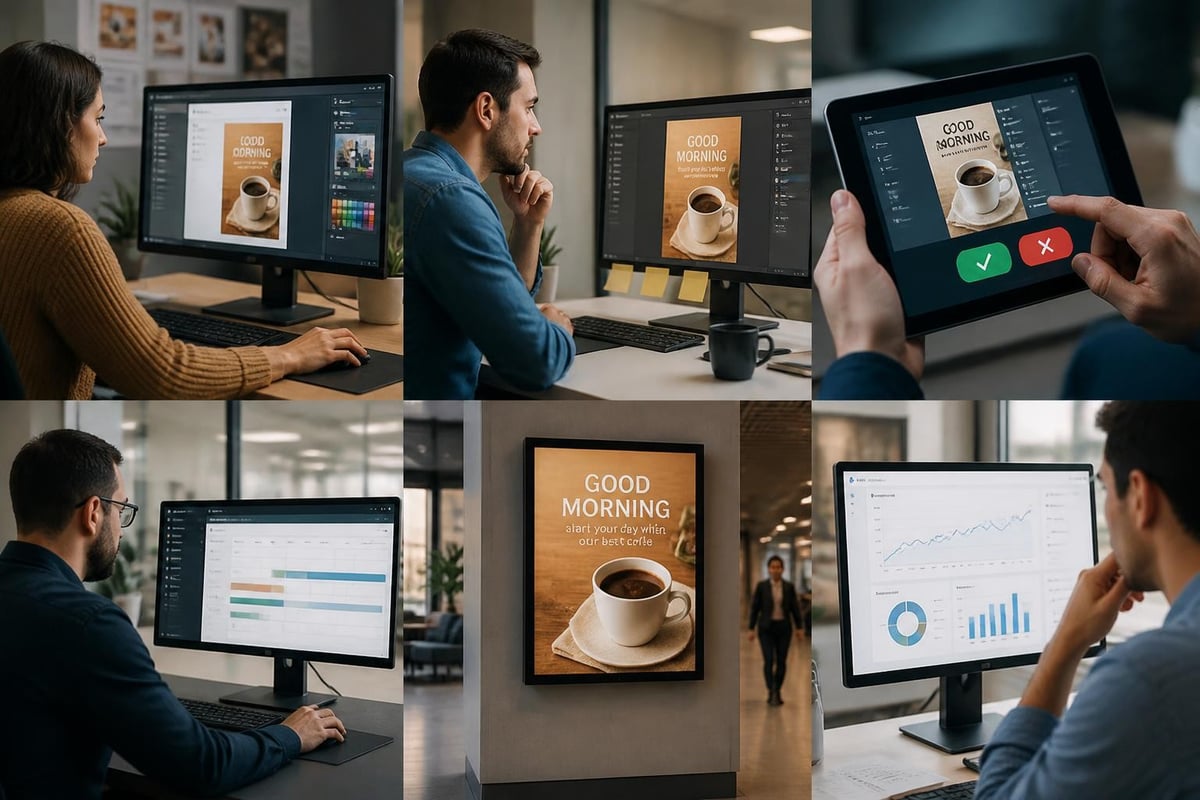
Digital signage products rely on robust software platforms to schedule, distribute, and update content across single screens or global networks.
Cloud-Based Management Systems
Modern content management systems (CMS) operate primarily through cloud infrastructure, enabling administrators to control displays from any internet-connected device. Leading platforms offer:
- Drag-and-drop content creation tools that require no design experience
- Template libraries for common use cases (retail promotions, menu boards, wayfinding)
- Scheduling engines that automate content changes by time, date, or triggered events
- Multi-user permissions for organizations with distributed content creation teams
- Analytics dashboards tracking content performance and viewer engagement
Proof-of-play verification has become essential for digital signage products deployed in advertising contexts. This functionality confirms that specific content appeared on designated screens at scheduled times, supporting billing accuracy and campaign verification requirements outlined in the IAB DOOH Measurement Guide.
Integration Capabilities
Enterprise digital signage products increasingly connect with broader business systems. Point-of-sale integration enables real-time pricing updates on menu boards, whilst inventory management connections can automatically highlight in-stock products or remove unavailable items from promotional displays.
Social media feeds, weather data, news tickers, and live event information create dynamic content that maintains viewer interest better than static messaging. The IAB DOOH & In-Store Retail Media Playbook provides comprehensive guidance on leveraging these data integrations for maximum advertising effectiveness.
Installation and Mounting Solutions for Digital Signage Products
Proper installation directly impacts the longevity, safety, and effectiveness of digital signage products. Professional mounting solutions accommodate various orientations, viewing angles, and environmental conditions.
Indoor Mounting Options
Wall mounts range from fixed brackets to articulating arms that allow angle adjustments. Consider:
- Weight capacity matching your display plus a safety margin
- VESA pattern compatibility (mounting hole spacing on the display)
- Landscape/portrait rotation if orientation changes may be required
- Cable management features for clean, professional installations
Freestanding kiosks work well for wayfinding, queue management, and interactive applications. These enclosures provide integrated mounting, cable routing, and often incorporate payment terminals, printers, or cameras for expanded functionality.
Ceiling mounts and suspended installations suit airport concourses, shopping centres, and other high-ceiling environments where wall mounting proves impractical. These require structural engineering assessment to ensure adequate support.
Outdoor and Weatherproof Enclosures
Outdoor digital signage products face harsh environmental challenges requiring specialized protection:
- IP-rated enclosures (typically IP65 or higher) seal out dust and water
- Climate control systems maintaining safe operating temperatures
- Anti-glare and high-brightness screens ensuring visibility in sunlight
- Vandal-resistant construction with tempered glass or polycarbonate protection
- Integrated lightning protection for electrical surge mitigation
When planning outdoor installations, the guidance provided by AVIXA on video wall installation proves invaluable for understanding site assessment, power requirements, and structural considerations.
Interactive and Sensor-Enhanced Digital Signage Products
Touch-enabled displays and sensor integration transform passive digital signage products into engaging interactive experiences.
Touchscreen Technologies
Capacitive touchscreens deliver the smartphone-like responsiveness users expect, supporting multi-touch gestures and providing excellent clarity. These work best in controlled indoor environments protected from weather and vandalism.
Infrared touch frames overlay existing displays without affecting image quality, scaling to very large formats (100+ inches) where capacitive solutions become prohibitively expensive. They function reliably in bright ambient light but may struggle with direct sunlight interference.
Audience Analytics and Sensors
Modern digital signage products increasingly incorporate sensors that gather anonymous viewer data:
- Computer vision cameras estimate audience demographics (age range, gender) without storing identifiable images
- Proximity sensors trigger content when viewers approach
- Dwell time measurement tracks how long audiences engage with specific messages
- Heat mapping identifies which screen zones attract the most attention
These analytics enable data-driven content optimization, though deployment requires careful attention to privacy regulations and transparent disclosure practices.
Specialized Digital Signage Products for Specific Applications
Different environments demand purpose-built digital signage products optimized for particular use cases.
Retail and Quick-Service Restaurants
Digital menu boards dominate quick-service restaurant environments, offering dayparting capabilities that automatically switch breakfast to lunch to dinner menus. High-brightness displays combat window glare whilst split-screen layouts maximize information density.
Shelf-edge displays in retail environments deliver targeted promotions at the point of purchase decision. These small-format screens (7-10 inches) integrate with inventory systems to highlight products nearing sell-by dates or overstocked items requiring clearance.
Corporate and Education
Meeting room displays outside conference rooms show real-time booking status, integrate with calendar systems, and enable on-the-spot reservations through touchscreen interfaces. These digital signage products reduce scheduling conflicts and improve space utilization.
Wayfinding and directory systems help visitors navigate complex corporate campuses, hospitals, and universities. Interactive touchscreen kiosks provide search functionality whilst networked displays throughout facilities guide visitors along optimal routes.
Transportation and Public Spaces
Passenger information displays at transport hubs require exceptional reliability, supporting 24/7 operation with redundant systems that prevent service disruptions. Real-time integration with scheduling databases ensures accurate arrival and departure information.
Emergency alert capabilities allow these digital signage products to interrupt regular content with critical safety messages, severe weather warnings, or evacuation instructions coordinated with building management systems.

Security and Compliance Considerations for Digital Signage Products
Network-connected digital signage products introduce cybersecurity risks that organizations must address through comprehensive security strategies.
Cybersecurity Best Practices
The NIST IoT Device Cybersecurity guidance establishes federal recommendations applicable to connected digital signage deployments. Key security measures include:
- Network segmentation isolating signage devices from critical business systems
- Regular firmware updates addressing known vulnerabilities
- Strong authentication protecting content management access
- Encrypted content delivery preventing unauthorized message injection
- Physical security controls preventing USB-based attacks on exposed media players
The HKCERT IoT Security Guideline for Digital Signage provides focused, practical recommendations for device hardening, network architecture, and operational security specific to signage deployments.
Accessibility and Regulatory Compliance
Public-facing digital signage products must accommodate users with diverse abilities. The ADA guidance on web accessibility informs design decisions for digital signage in government facilities and public accommodations:
- Text size and contrast ensuring readability for visually impaired users
- Audio descriptions for critical information
- Clear, simple language supporting cognitive accessibility
- Adequate display time allowing slower readers to consume messages
- Closed captioning for video content
The content design guidance from Texas A&M University's digital signage best practices offers evidence-based recommendations for creating clear, accessible, and effective signage content that serves diverse audiences.
Total Cost of Ownership for Digital Signage Products
Understanding the complete financial picture requires looking beyond initial hardware costs to encompass ongoing operational expenses.
Initial Investment Components
| Cost Category | Typical Range | Notes |
|---|---|---|
| Display hardware | £800-£15,000 per screen | Varies by size, technology, brightness |
| Media players | £150-£800 per screen | SoC displays eliminate this cost |
| Content management software | £30-£150 per screen/month | Or one-time £2,000-£10,000 perpetual licence |
| Installation and mounting | £300-£2,000 per screen | Complex installations cost significantly more |
| Content creation (initial) | £500-£5,000 | Professional design services or DIY with templates |
Ongoing Operational Costs
Software subscriptions for cloud-based content management typically charge monthly or annual fees per screen or per location. Enterprise agreements often offer volume discounts for large deployments.
Electricity consumption varies significantly by display technology and operating hours. A 55-inch commercial LCD running 16 hours daily typically consumes 800-1,200 kWh annually (approximately £150-£250 in electricity costs), whilst LED video walls may consume substantially more.
Content updates and refreshes represent ongoing creative expenses. Stale content rapidly loses effectiveness, requiring regular investment in new designs, photography, and messaging aligned with current campaigns.
Maintenance and support includes occasional hardware failures, software troubleshooting, and network connectivity issues. Factor 5-10% of initial hardware cost annually for maintenance reserves.
Future Trends Shaping Digital Signage Products
Emerging technologies continue to expand the capabilities and applications of digital signage products.
Artificial Intelligence and Automation
AI-powered content optimization analyzes viewer engagement data to automatically adjust creative elements, testing different colour schemes, layouts, and messaging to identify top-performing variations. This eliminates manual A/B testing and continuously improves campaign effectiveness.
Automated content generation leverages AI to create localized, personalized messaging at scale. A restaurant chain might automatically generate unique promotional content for each location based on local weather, demographics, and inventory levels without manual intervention.
Sustainability and Energy Efficiency
Modern digital signage products increasingly prioritize environmental responsibility. Energy-efficient LED backlighting, automatic brightness adjustment based on ambient light levels, and sleep modes during non-operating hours significantly reduce power consumption compared to earlier generations.
Circular economy approaches focus on modular designs that enable component upgrades rather than complete replacements, extending product lifecycles and reducing electronic waste.
Digital signage products have matured into sophisticated communication tools that deliver measurable business results when selected and deployed strategically. From understanding display technologies and content management platforms to ensuring security and accessibility compliance, successful implementations require careful planning across multiple dimensions. Signshoponline brings extensive expertise in digital signage solutions alongside traditional signage offerings, helping businesses navigate technology choices, installation requirements, and content strategies that engage audiences and drive results. Whether you're launching your first digital display or expanding a multi-location network, partnering with experienced providers ensures your investment delivers lasting value.