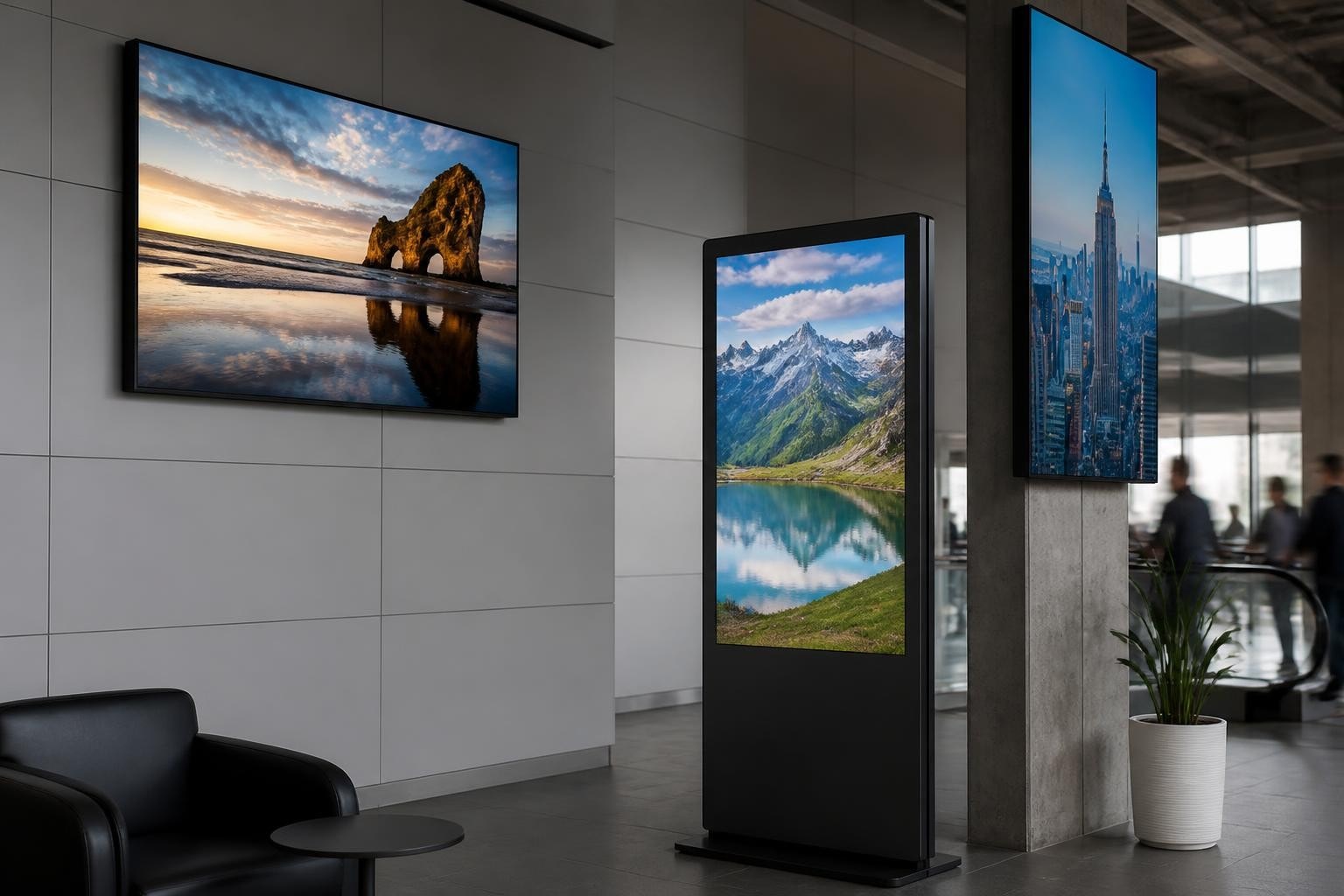
Retail environments have undergone a remarkable transformation over the past decade, with technology reshaping how businesses communicate with customers. Digital signage for retail stores has emerged as one of the most effective tools for capturing attention, delivering targeted messages, and enhancing the overall shopping experience. As consumer expectations continue to evolve, retailers are increasingly turning to dynamic displays to stay competitive and relevant in an omnichannel marketplace. According to Deloitte's 2025 retail outlook, in-store digital transformation has become a strategic priority for retailers seeking to differentiate their customer experience.
Understanding Digital Signage Technology for Modern Retail
Digital signage for retail stores encompasses a broad range of display technologies designed to convey information, advertise products, and engage customers through dynamic visual content. These systems typically consist of screens (LED, LCD, or projection-based), media players, content management software, and connectivity infrastructure.
The fundamental components work together to deliver scheduled content, real-time updates, and interactive experiences. Modern systems support various formats including video, animation, live social media feeds, and data-driven content that responds to external triggers such as weather, time of day, or inventory levels.
Hardware Considerations
When selecting digital signage hardware, retailers must evaluate several critical factors:
- Screen size and resolution: Larger formats (55-inch and above) suit window displays and feature walls, whilst smaller screens work well for point-of-sale messaging
- Brightness levels: High-nit displays (2,500+ nits) are essential for window-facing installations with direct sunlight exposure
- Durability ratings: Commercial-grade screens offer longer lifespans and continuous operation capabilities compared to consumer displays
- Mounting options: Wall mounts, floor stands, ceiling suspensions, and kiosk enclosures each serve different spatial requirements
Retailers should also consider future-proofing investments by selecting systems with upgrade paths and compatibility with emerging technologies such as AI-driven content personalisation and touchless interaction.
Strategic Placement Within Retail Environments
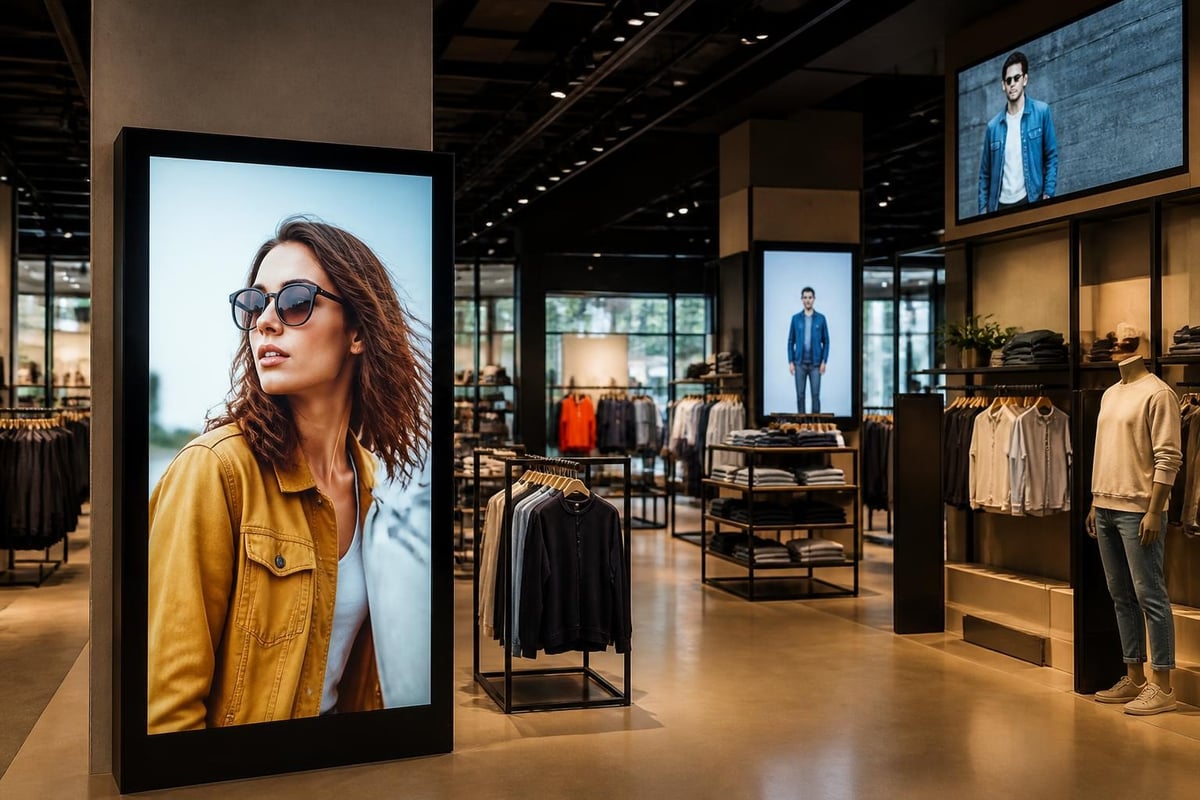
The effectiveness of digital signage for retail stores depends significantly on strategic placement throughout the customer journey. Each location serves distinct purposes and requires tailored content strategies.
| Placement Zone | Primary Function | Content Type | Typical Screen Size |
|---|---|---|---|
| Storefront/Window | Attract foot traffic | Promotional videos, brand stories | 55"-75" |
| Entry/Reception | Welcome, wayfinding | Store directory, offers | 42"-55" |
| Product Aisles | Product information | Specifications, demonstrations | 32"-42" |
| Point of Sale | Queue entertainment, impulse buys | Short videos, cross-sell messages | 24"-32" |
| Fitting Rooms | Engagement, assistance | Style tips, request assistance | 21"-32" |
Window displays benefit from eye-catching motion content that stops passersby in their tracks. Research suggests movement attracts 400% more views than static signage, making animated content particularly valuable for storefront applications.
Within the store, digital displays at decision points provide product comparisons, customer reviews, and educational content that supports informed purchasing. Many retailers now integrate digital signage with inventory management systems to highlight in-stock items and reduce customer frustration.
Queue Management and Customer Flow
Digital signage plays a crucial role in managing customer expectations during peak periods. Queue management displays show estimated wait times, entertain waiting customers, and promote additional products or services. This dual function improves perceived wait times whilst creating additional revenue opportunities.
Some retailers complement traditional digital displays with solutions found in window frosting to balance privacy, brand messaging, and natural light-creating cohesive visual environments that enhance rather than overwhelm the shopping experience.
Content Strategy and Management
Successful digital signage for retail stores requires more than impressive hardware. Content strategy determines whether displays truly engage customers or become expensive wallpaper.
Content Planning Framework
Effective retail digital signage content follows these principles:
- Relevance: Messages must align with customer intent at each location within the store
- Brevity: Most viewers spend 3-7 seconds per screen; concise messaging maximises impact
- Visual hierarchy: Clear focal points, readable typography, and strong contrast ensure messages communicate instantly
- Refresh cycles: Rotating content every 10-15 seconds maintains interest without causing distraction
- Brand consistency: All content should reinforce brand identity through colours, fonts, and messaging tone
Content calendars should balance evergreen material with timely promotions, seasonal campaigns, and event-driven messaging. The IAB's DOOH & In-Store Retail Media Playbook provides comprehensive guidance on content formats and measurement strategies for retail media networks.
Dynamic Content Capabilities
Advanced digital signage systems enable real-time content adaptation based on various triggers:
- Weather-responsive messaging: Promote umbrellas during rain, sunglasses during sunny spells
- Inventory-linked displays: Automatically feature available stock and remove out-of-stock items
- Time-based scheduling: Breakfast items in the morning, lunch options midday, dinner products in the evening
- Customer demographic targeting: Facial recognition software (where legally permitted) can serve age or gender-appropriate content
These capabilities transform digital signage from a broadcast medium into a responsive communication tool that delivers personalised experiences at scale.

Measuring Return on Investment
Retailers implementing digital signage for retail stores must establish clear metrics to evaluate performance and justify ongoing investment. Multiple measurement approaches provide comprehensive insights into effectiveness.
Quantitative Metrics
| Metric Category | Measurement Method | What It Reveals |
|---|---|---|
| Engagement | Dwell time sensors, facial detection | How long customers view displays |
| Conversion | POS correlation analysis | Sales lift from promoted items |
| Foot Traffic | Entrance counters, heat mapping | Storefront effectiveness |
| Content Performance | Playlist analytics | Which messages resonate |
| Technical Uptime | System monitoring | Reliability and maintenance needs |
Sales correlation represents the most direct ROI indicator. By comparing sales data for promoted products during campaign periods versus baseline performance, retailers can attribute revenue increases to specific digital signage initiatives.
Qualitative Assessments
Customer surveys and staff feedback provide valuable context that numbers alone cannot capture. Questions might explore brand perception changes, information usefulness, or whether digital displays influenced purchase decisions.
The IAB UK's guidance on maximising digital signage ROI offers practical frameworks for measurement and monetisation, including strategies for generating revenue through advertising partnerships with product manufacturers.
Technical Implementation Considerations
Deploying digital signage for retail stores involves several technical decisions that impact long-term success, scalability, and total cost of ownership.
Network Infrastructure Requirements
Robust connectivity forms the foundation of reliable digital signage networks. Retailers must choose between cloud-based content management systems that require consistent internet connectivity and local server solutions that operate independently but require on-site management.
Key infrastructure considerations include:
- Bandwidth allocation for content downloads and updates
- Network security to prevent unauthorised access or content manipulation
- Backup power supplies to maintain operation during outages
- Remote monitoring and management capabilities for multi-location deployments
As Retail Dive's article on building the store of the future emphasises, upgrading IT foundations should precede digital transformation projects to ensure infrastructure can support advanced technologies.
Content Management Systems
Digital signage content management systems (CMS) vary widely in capabilities, complexity, and cost. Essential features for retail applications include:
- Multi-location management: Control all store displays from a central dashboard
- User permissions: Restrict editing rights by role or location
- Scheduling automation: Programme content changes in advance
- Template libraries: Streamline content creation with branded templates
- Proof of play reporting: Verify content displayed as scheduled
Many retailers benefit from partnering with signage specialists who provide complete solutions including hardware, software, installation, and ongoing support. This approach reduces internal technical burden whilst ensuring professional implementation.
Compliance and Accessibility Standards
Digital signage for retail stores must address legal requirements and accessibility considerations to serve all customers and avoid regulatory issues.
Accessibility Requirements
Whilst dynamic digital displays offer advantages over traditional signage, they must still meet accessibility standards in certain contexts. The ADA's 2010 Standards for Accessible Design specify technical requirements for visual characters, mounting heights, and contrast ratios that apply to informational and wayfinding signage.
Accessibility best practices for retail digital signage include:
- Providing text alternatives for video content through captions
- Ensuring sufficient colour contrast for readability
- Avoiding flashing or strobing effects that may trigger photosensitive conditions
- Maintaining appropriate mounting heights for wheelchair users
- Complementing digital wayfinding with traditional accessibility signs where required by regulation
Retailers should consult with accessibility experts to ensure digital signage implementations comply with applicable standards whilst serving all customers effectively.
Data Privacy and Security
Digital signage systems that collect customer data through cameras, sensors, or interactive touchpoints must comply with data protection regulations. Transparent privacy policies, secure data handling, and appropriate consent mechanisms protect both customers and retailers from legal exposure.
Integration With Broader Marketing Strategies
The most successful digital signage for retail stores functions as one component within integrated marketing ecosystems rather than isolated installations.
Omnichannel Consistency
Digital in-store displays should reinforce messages customers encounter through other channels including email, social media, mobile apps, and e-commerce platforms. Consistent promotions, visual identity, and timing across channels create cohesive experiences that strengthen brand recognition and trust.
For example, customers who receive email promotions on Monday should see those same offers highlighted on in-store digital signage when they visit later in the week. This consistency reinforces messaging and increases conversion likelihood.
Complementary Physical Signage
Digital displays work most effectively alongside traditional signage solutions. Pylon signs guide customers to retail locations, whilst interior digital screens deliver dynamic messaging once they arrive. Similarly, banner flags might attract attention at outdoor events, with digital signage continuing the conversation indoors.
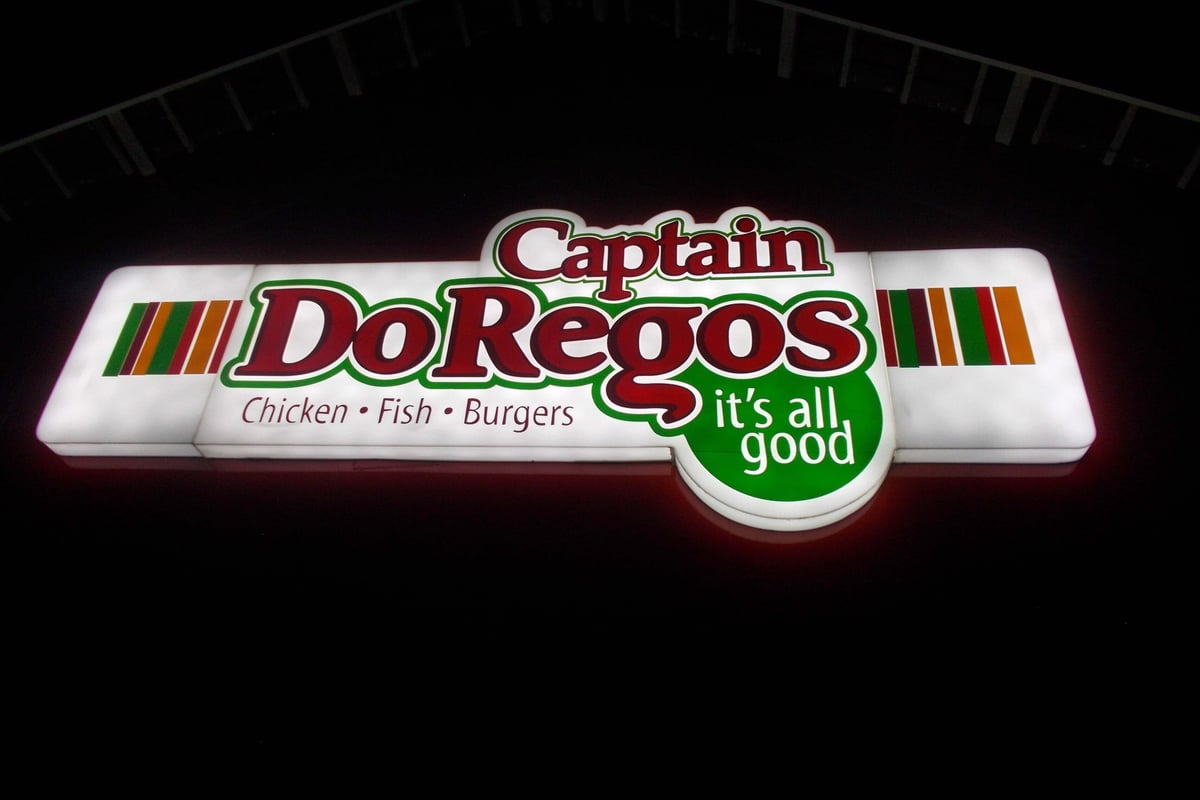
Traditional illuminated solutions such as Lightbox Signage remain valuable for permanent branding, wayfinding, and regulatory messaging that doesn't require frequent updates. These established formats complement digital installations by handling stable information whilst digital screens manage time-sensitive promotions and dynamic content.

Social Media Integration
Many retailers leverage digital signage to showcase real-time social media feeds, user-generated content, and customer reviews. This approach builds community, encourages social sharing, and provides authentic social proof that influences purchase decisions.
Hashtag campaigns invite customers to share photos wearing or using products, with selected posts appearing on in-store screens. This creates engagement loops that benefit both online and offline channels whilst generating valuable content.
Energy Efficiency and Sustainability
Environmental responsibility increasingly influences retail technology decisions. Digital signage for retail stores offers both challenges and opportunities regarding sustainability.
Power Consumption Management
Modern LED displays consume significantly less energy than older technologies, with power requirements varying by size, brightness, and usage patterns. A typical 55-inch commercial display operating 12 hours daily uses approximately 150-200 kWh monthly.
Energy optimisation strategies include:
- Scheduling displays to power down during closed hours
- Adjusting brightness based on ambient lighting conditions
- Selecting Energy Star certified commercial displays
- Implementing motion sensors that activate screens only when customers approach
- Choosing content with darker backgrounds that reduce LED power draw
These measures reduce operating costs whilst supporting corporate sustainability commitments that increasingly influence consumer purchasing decisions.
Lifecycle Considerations
Digital signage hardware eventually requires replacement, creating electronic waste management responsibilities. Retailers should partner with manufacturers offering take-back programmes, prioritise modular designs that allow component upgrades, and select durable commercial-grade equipment that maximises useful life.
Content delivery via cloud systems eliminates physical media production and distribution, representing one sustainability advantage digital signage holds over traditional printed materials.
Future Trends Shaping Retail Digital Signage
The digital signage landscape continues evolving rapidly as new technologies mature and customer expectations shift.
Artificial Intelligence and Personalisation
AI-powered content engines analyse customer demographics, behaviour patterns, and environmental factors to serve personalised messages in real-time. Computer vision technology detects viewer age range, gender, and attention patterns-serving relevant content whilst respecting privacy boundaries.
Natural language processing enables voice-activated digital assistants that help customers find products, check specifications, or access additional information through conversational interfaces.
Augmented Reality Integration
AR-enabled digital signage allows customers to visualise products in context, try virtual makeup or clothing, and access layered information through smartphone integration. These immersive experiences bridge digital and physical retail, creating memorable interactions that drive engagement and purchases.
Programmatic Advertising Networks
Forward-thinking retailers monetise digital signage assets by selling advertising space to complementary brands and product manufacturers. Programmatic platforms automate ad buying, placement, and performance tracking-creating new revenue streams from existing infrastructure.
This retail media trend transforms digital signage from a cost centre into a profit generator whilst providing customers with relevant product information and promotional offers.
Staff Training and Change Management
Technology implementation succeeds or fails based on human factors. Digital signage for retail stores requires staff engagement, training, and ongoing support.
Empowering Store Teams
Frontline staff should understand how digital signage supports sales objectives and customer service. Training should cover:
- Content purpose and messaging strategies
- How to respond to customer questions about promoted products
- Basic troubleshooting for common technical issues
- Procedures for requesting content updates or reporting problems
- Opportunities to provide feedback on content effectiveness
Stores with authority to customise local content within brand guidelines report higher engagement and more relevant messaging than those operating under rigid centralised control.
Building a Content Culture
Successful digital signage programmes foster organisational cultures that value visual communication, creative storytelling, and data-driven optimisation. Regular content performance reviews, creative workshops, and recognition for effective campaigns build momentum and continuous improvement.
Multi-Location Deployment Strategies
Retailers with multiple locations face unique challenges in digital signage implementation, requiring careful planning to balance consistency with local relevance.
Centralised Versus Distributed Management
Centralised control offers:
- Brand consistency across all locations
- Efficient campaign deployment
- Simplified content production
- Reduced training requirements
Distributed management provides:
- Local customisation for regional preferences
- Faster response to location-specific opportunities
- Store team ownership and engagement
- Tailored messaging for unique customer demographics
Many retailers adopt hybrid models where corporate marketing controls brand-level campaigns whilst allowing local customisation for specific promotions, events, or inventory situations.
Scalable Implementation Approaches
Rather than deploying across all locations simultaneously, phased rollouts allow retailers to refine strategies, validate ROI, and build internal expertise before full-scale investment.
Typical phased approach:
- Pilot programme in 2-3 representative locations
- Measure performance against defined objectives
- Refine content strategies and technical specifications
- Roll out to high-priority locations (flagship stores, high-traffic venues)
- Expand to remaining locations based on validated business case
This methodical approach reduces risk, builds organisational confidence, and ensures resources focus where impact is greatest.
Digital signage for retail stores represents a powerful tool for engaging customers, driving sales, and modernising brand experiences in 2026's competitive retail landscape. By carefully considering hardware selection, content strategy, technical infrastructure, and measurement frameworks, retailers can maximise returns whilst creating memorable customer experiences. Whether you're implementing your first digital display or expanding an existing network, Signshoponline offers comprehensive digital signage solutions alongside traditional signage options to meet your complete retail communication needs.