


Fabricated signage represents the pinnacle of custom sign manufacturing, where precision engineering meets creative design to produce three-dimensional, durable, and visually striking displays. Unlike flat printed graphics or basic vinyl applications, fabricated signage involves the careful construction of individual components-metal letters, acrylic shapes, illuminated channels, and architectural elements-that are cut, formed, welded, assembled, and finished to exact specifications. This manufacturing approach delivers exceptional depth, permanence, and professional presence, making it the preferred choice for businesses seeking to establish strong brand identity at their physical locations.
Understanding Fabricated Signage Construction Methods
The term "fabricated signage" encompasses a wide range of construction techniques, each suited to specific design requirements, installation environments, and budget considerations. Traditional methods include metal fabrication using aluminium, stainless steel, brass, or bronze, where flat sheets are laser-cut or routed into letter shapes, then formed using brake presses or roll-forming equipment to create returns and depth.
Core Fabrication Techniques
Modern sign manufacturing employs several primary fabrication approaches:
- Channel letter construction using bent aluminium returns with acrylic or polycarbonate faces
- Flat-cut dimensional letters routed from PVC, acrylic, or metal substrates
- Cast metal elements created through moulding processes for intricate detail
- Welded framework assemblies that support larger architectural signage structures
- CNC-routed components offering precision and repeatability for complex geometries
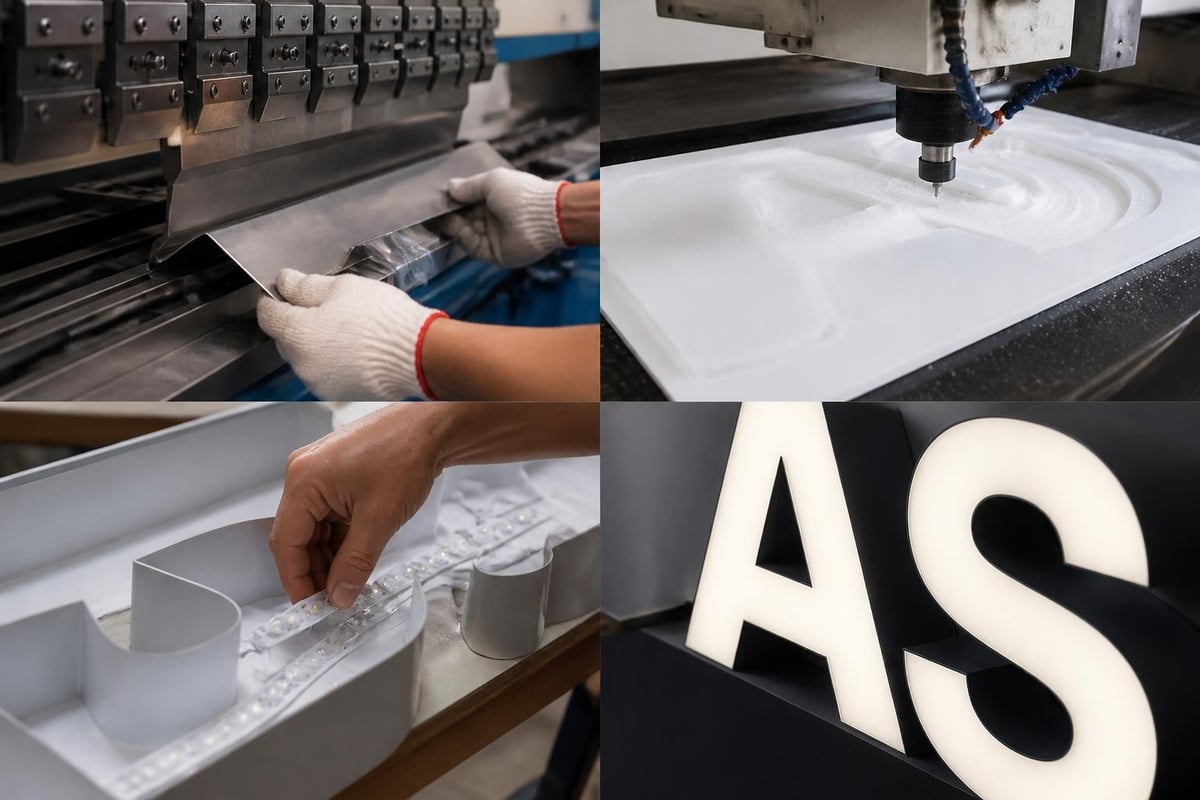
Precision equipment drives modern fabrication capabilities. Computer numerical control (CNC) routers cut intricate shapes with tolerances measured in fractions of a millimetre, whilst laser cutters provide clean edges on metal substrates without mechanical stress. Brake presses form consistent bends in sheet metal, creating uniform letter returns that maintain dimensional accuracy across entire alphabets. Welding stations join metal components with structural integrity that withstands decades of environmental exposure.
Material Selection for Durability
Material choice fundamentally impacts the longevity, appearance, and maintenance requirements of fabricated signage. Aluminium dominates commercial applications due to its favourable strength-to-weight ratio, corrosion resistance, and formability. The material accepts powder-coat finishes that deliver decades of colour retention without fading, peeling, or chalking.
| Material | Primary Benefits | Typical Applications | Expected Lifespan |
|---|---|---|---|
| Aluminium | Lightweight, rust-resistant, paintable | Channel letters, dimensional logos | 15-25 years |
| Stainless steel | Premium appearance, extreme durability | Corporate identity, architectural features | 25-40 years |
| Acrylic | Excellent light transmission, weather-stable | Illuminated faces, decorative elements | 10-15 years |
| PVC/Foam board | Cost-effective, easy fabrication | Interior signage, temporary installations | 5-10 years |
| Brass/Bronze | Distinctive patina, prestige aesthetic | Historical buildings, luxury brands | 40+ years |
Stainless steel offers unmatched durability and a premium aesthetic, particularly in brushed or polished finishes. The material resists corrosion even in coastal environments, making it ideal for pylon signs and monument installations subjected to harsh weather. Brass and bronze provide distinctive warmth and develop attractive patinas over time, appealing to heritage properties and luxury establishments.
Illumination Technologies in Fabricated Signage
Illuminated fabricated signage extends brand visibility beyond daylight hours whilst creating dramatic visual impact. Light-emitting diode (LED) technology has revolutionized sign illumination, replacing neon, fluorescent, and incandescent sources with energy-efficient modules that consume 70-85% less electricity whilst delivering superior brightness and colour consistency.
LED Module Configuration
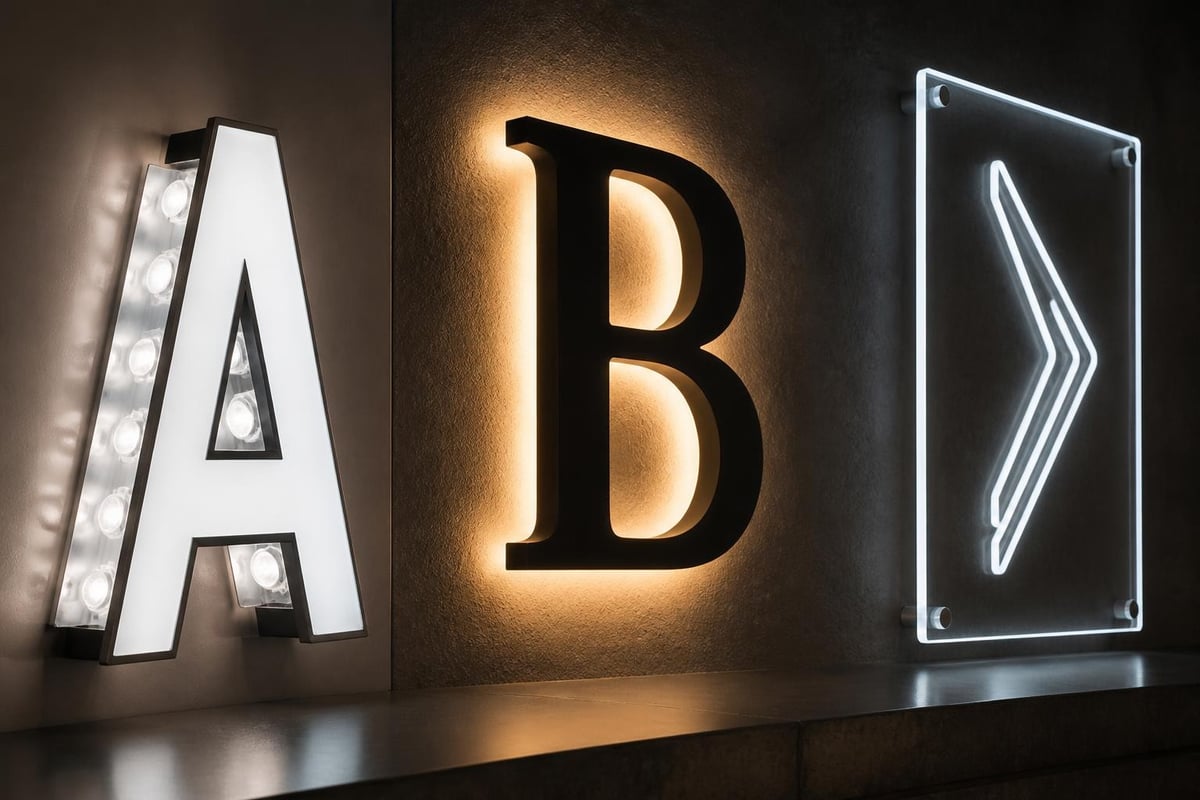
Contemporary fabricated signage typically employs one of three LED illumination approaches. Front-lit channel letters feature LED modules mounted inside three-dimensional letter forms, with light projecting through translucent acrylic or polycarbonate faces. This configuration delivers maximum legibility and vibrant colour saturation, ideal for retail environments and roadside identification.
Reverse-lit (halo-lit) letters mount opaque faces slightly forward from the mounting surface, with LEDs directed backward to create a glowing outline effect. This sophisticated approach suits corporate environments and architectural applications where subtle elegance trumps maximum brightness. Dimensional lettering often incorporates this technique to enhance depth perception.
Edge-lit systems utilize clear acrylic panels with LEDs positioned along one or more edges, directing light through the material via internal reflection. Laser-etched or routed details within the acrylic scatter light at specific points, creating illuminated graphics without visible light sources. This technique excels in creating sleek, modern reception signs with minimal visual bulk.
The IES Technical Committee guide provides comprehensive recommendations for illumination design, addressing luminance levels, uniformity ratios, and measurement protocols. Proper lighting design ensures consistent appearance across viewing angles whilst minimizing energy consumption and light pollution concerns.
Energy Compliance and Power Management
Regulatory frameworks increasingly govern sign illumination to reduce energy consumption and minimize sky glow. The California Energy Commission technical guidance on nonresidential sign lighting establishes prescriptive power allowances based on sign area, with specific requirements for internally illuminated channel letters, cabinet signs, and architectural accent lighting.
Modern fabricated signage installations incorporate power-management features to optimize energy performance:
- Astronomical time clocks that adjust operating hours based on seasonal sunset/sunrise variations
- Dimming controllers reducing output during low-traffic hours whilst maintaining visibility
- Smart monitoring systems detecting module failures and tracking consumption patterns
- Zoned switching allowing independent control of different sign elements
These systems not only ensure compliance with energy codes but also extend LED service life and reduce operating costs. The International Sign Association provides additional resources on navigating municipal lighting regulations that vary significantly across jurisdictions.
Design Considerations for Effective Fabricated Signage
Successful fabricated signage balances aesthetic appeal with functional performance, considering viewing distance, environmental conditions, brand guidelines, and architectural context. Letter height calculations follow established formulas relating character size to legibility distance-typically one inch of letter height per 10-15 feet of viewing distance under optimal conditions.
Typography selection dramatically impacts readability and brand perception. Sans-serif typefaces with open counters and consistent stroke weights generally perform best in dimensional fabrication, avoiding thin strokes that appear fragile or create structural weaknesses. Custom typefaces require careful engineering analysis to ensure all letterforms can be fabricated with adequate strength and proper illumination distribution.
Colour and Finish Options
Fabricated signage accommodates diverse finish treatments beyond basic paint:
- Powder coating delivering durable, uniform colour with excellent UV resistance
- Vinyl film wrapping enabling metallic, textured, or gradient effects
- Brushed or polished metal creating premium, maintenance-free surfaces
- Patina treatments developing controlled oxidation for aged appearances
- Painted acrylic faces offering vibrant translucent or opaque colour options
Colour selection considers both daytime and illuminated appearance. Translucent acrylic faces appear dramatically different when backlit, with some colours shifting in hue or saturation. Sample fabrication and testing under actual lighting conditions prevents disappointing surprises after installation.
Accessibility and Compliance Requirements
Fabricated signage in public accommodations and commercial facilities must comply with accessibility standards ensuring information remains available to individuals with vision impairments. The ADA Standards for Accessible Design establish mandatory technical requirements for permanent room identification and directional signage.
Tactile fabricated signage incorporates raised characters and Grade 2 Braille, with specific requirements governing:
- Character height (minimum 5/8 inch, maximum 2 inches measured as uppercase X)
- Stroke thickness (based on character height using defined ratios)
- Character spacing (minimum 1/8 inch between characters, 3/8 inch between words)
- Mounting height (48-60 inches to baseline from floor)
- Finish contrast (70% light-on-dark or dark-on-light contrast ratio)
Quality accessibility signs require precision fabrication to meet these exacting standards. CNC routers excel at producing consistently raised characters, whilst specialized equipment applies Braille dots at precise locations and depths.
Installation Methods and Structural Engineering
Professional installation separates temporary signage from permanent architectural elements that endure for decades. Fabricated signage installation methods depend on substrate type, sign weight, exposure to wind loads, and aesthetic considerations regarding visible fasteners.
Common Mounting Techniques
Stud mounting remains the most versatile attachment method, using threaded rods extending from the back of letters that pass through pre-drilled holes in the mounting surface. Structural adhesive or mechanical fasteners secure the studs from behind, creating a "floating" appearance with no visible hardware. This approach suits masonry, metal panel, and wood substrates.
Flush mounting applies directly to wall surfaces using structural adhesive, often supplemented with mechanical fasteners during curing. This economical method works well for lighter-weight foam or PVC fabricated elements in protected locations. Proper surface preparation ensures adhesive bond strength exceeds the weight and wind loading of mounted components.
Raceway systems house electrical connections for illuminated fabricated signage, consolidating multiple letters onto a single enclosure that simplifies installation and maintenance. Painted to match the mounting surface, raceways provide structural support whilst maintaining clean aesthetics. This approach proves particularly valuable for industrial signs requiring frequent updates or reconfigurations.
| Mounting Method | Best Applications | Visibility | Installation Complexity |
|---|---|---|---|
| Stud mount | Premium installations, any substrate | Minimal (floating look) | Moderate to high |
| Flush mount | Interior, protected locations | None (direct application) | Low to moderate |
| Raceway | Multiple letters, electrical consolidation | Low (painted to match) | Moderate |
| Frame system | Large-scale architectural features | Varies (integrated design) | High |
Manufacturing Capabilities and Custom Solutions
Advanced fabrication shops maintain diverse equipment inventories enabling custom solutions that meet unique design requirements. Fabricated 3d Signage capabilities distinguish full-service manufacturers from basic sign shops limited to standard products and templates.
The manufacturing process for complex fabricated signage follows a structured workflow. Design approval triggers engineering development, where technical drawings specify dimensions, materials, fastener locations, and electrical details. CAD files drive CNC equipment, ensuring precision cutting of metal, acrylic, and foam components. Fabrication teams form returns, weld assemblies, and prepare surfaces for finishing.
Finishing departments apply powder coating, paint, or vinyl films in controlled environments that prevent contamination and ensure proper curing. Electrical assembly follows, with LED modules wired and tested before final quality inspection. Packaging protects finished components during transportation to installation sites.
Quality fabricators maintain documented processes covering every manufacturing stage, from incoming material inspection through final testing protocols. This systematic approach ensures consistency across multiple letter sets and enables reliable replication when expansion or updates require additional signage elements.
Advanced Materials and Future Fabrication Methods
Emerging technologies continue expanding the possibilities for fabricated signage design and production. Additive manufacturing-commonly known as 3D printing-enables geometries impossible through traditional subtractive methods. Research into advanced additive manufacturing explores volumetric approaches that could revolutionize complex three-dimensional sign fabrication.
Current 3D printing applications in signage focus on prototyping, custom decorative elements, and small-batch production. Large-format printers accommodate objects up to several metres in dimension, whilst multi-material systems combine rigid and flexible polymers within single components. As equipment costs decline and material properties improve, additive manufacturing will increasingly complement traditional fabrication methods.
Sustainable material development addresses environmental concerns whilst maintaining performance standards:
- Recycled aluminium requiring 95% less energy than primary production
- Bio-based polymers derived from renewable feedstocks
- Low-VOC coating systems minimizing harmful emissions
- Modular designs facilitating component replacement rather than complete disposal
These innovations align with corporate sustainability initiatives whilst delivering the durability and aesthetic quality expected from fabricated signage installations.
Maintenance and Longevity Optimization
Proper maintenance extends fabricated signage service life and preserves appearance throughout decades of exposure. Routine cleaning removes accumulated dirt, pollen, and environmental contaminants that dull finishes and reduce illumination effectiveness. Mild detergent solutions and soft cloths prevent scratching whilst avoiding harsh chemicals that degrade protective coatings.
Illuminated systems require periodic inspection of electrical connections, LED modules, and power supplies. Early detection of failing components prevents complete outages and maintains consistent appearance across all illuminated elements. Quality installations incorporate accessible service panels and disconnect switches that simplify maintenance procedures.
Preventive Maintenance Schedule
Professional fabricated signage benefits from scheduled maintenance visits:
- Monthly visual inspection for damage, discolouration, or illumination failures
- Quarterly cleaning of faces, returns, and mounting hardware
- Annually electrical testing, fastener inspection, and protective coating assessment
- Every 3-5 years LED module replacement based on lumen depreciation curves
- Every 10-15 years comprehensive restoration including refinishing and structural evaluation
This proactive approach prevents minor issues from escalating into costly repairs whilst maintaining the professional appearance that justified the initial investment in quality fabricated signage.
Integration with Digital Signage Systems
Contemporary installations increasingly combine static fabricated signage with dynamic digital displays, creating hybrid solutions that balance permanence with content flexibility. Moving LED signs complement traditional dimensional letters by delivering timely messages, promotional content, and real-time information.
Architectural integration ensures visual harmony between static and dynamic elements. Fabricated metal frames house LED display modules whilst matching the finish, proportions, and design language of accompanying dimensional lettering. This unified approach maintains brand consistency whilst leveraging the attention-commanding capabilities of digital content.
Content management systems synchronize digital displays with business operations, automatically updating pricing, promotional messages, or wayfinding information. Cloud-based platforms enable centralized control across multiple locations, whilst scheduling features ensure appropriate content displays during specific timeframes.
Sector-Specific Applications
Fabricated signage serves distinct functional and aesthetic requirements across different industries. Retail environments demand vibrant, attention-commanding installations that attract customers and reinforce brand identity. Retail signs often incorporate illumination, bold colours, and dimensional elements that create visual hierarchy within competitive shopping districts.
Corporate campuses favour sophisticated fabricated signage reflecting organizational values and professional standards. Brushed stainless steel, subdued illumination, and architectural integration communicate stability and expertise. Monument signs at facility entrances establish presence whilst complementing landscape design and architectural features.
Healthcare facilities require directional signs that guide patients and visitors through complex buildings whilst maintaining calming aesthetics. Fabricated wayfinding systems incorporate pictograms, multilingual text, and colour coding that improve navigation efficiency. Compliance with accessibility standards ensures information remains available to all users regardless of visual capabilities.
Educational institutions balance tradition with contemporary design through fabricated signage that honours heritage whilst embracing innovation. Cast bronze plaques commemorate donors and historical events, whilst dimensional letters in school colours reinforce identity and pride. Durability proves essential in high-traffic environments subjected to vandalism and weather extremes.
Project Planning and Budget Considerations
Successful fabricated signage projects begin with thorough planning addressing design objectives, site conditions, regulatory requirements, and budget constraints. Early consultation with experienced fabricators identifies opportunities and constraints that inform design development, preventing costly revisions during manufacturing.
Budget allocation should consider total project costs beyond fabrication:
- Design and engineering services (8-15% of total project cost)
- Permit fees and regulatory compliance documentation (2-5%)
- Fabrication and finishing (45-60%)
- Electrical components and installation (15-25%)
- Crane or lift equipment rental for large installations (3-8%)
- Contingency for unforeseen conditions (10-12%)
Value engineering balances design aspirations with financial realities, identifying cost-effective alternatives that preserve project intent. Substituting materials, simplifying construction methods, or phasing implementation across multiple budget cycles maintains forward progress whilst respecting fiscal constraints.
Fabricated signage combines engineering precision, material expertise, and creative design to deliver permanent installations that communicate brand identity whilst withstanding environmental challenges for decades. From illumination technologies and accessibility compliance to advanced manufacturing methods and maintenance protocols, successful projects address technical requirements alongside aesthetic objectives. Whether you need sophisticated Fabricated 3d Signage for corporate headquarters or attention-commanding retail installations, Signshoponline delivers comprehensive fabrication capabilities backed by expertise across materials, methods, and applications. Explore how custom-fabricated solutions can elevate your brand presence today.


