Effective office signage serves as the silent communicator within any workplace, guiding visitors, reinforcing brand identity, ensuring safety compliance, and enhancing the overall professional atmosphere. Whether you're managing a corporate headquarters, a co-working space, or a small business office, the right signage strategy transforms how people experience and interact with your environment. From directional wayfinding to digital displays, office signage encompasses a diverse range of solutions that balance functionality with aesthetic appeal. Understanding the various types, benefits, and implementation strategies ensures your workplace communicates clearly and professionally at every touchpoint.
Understanding the Core Functions of Office Signage
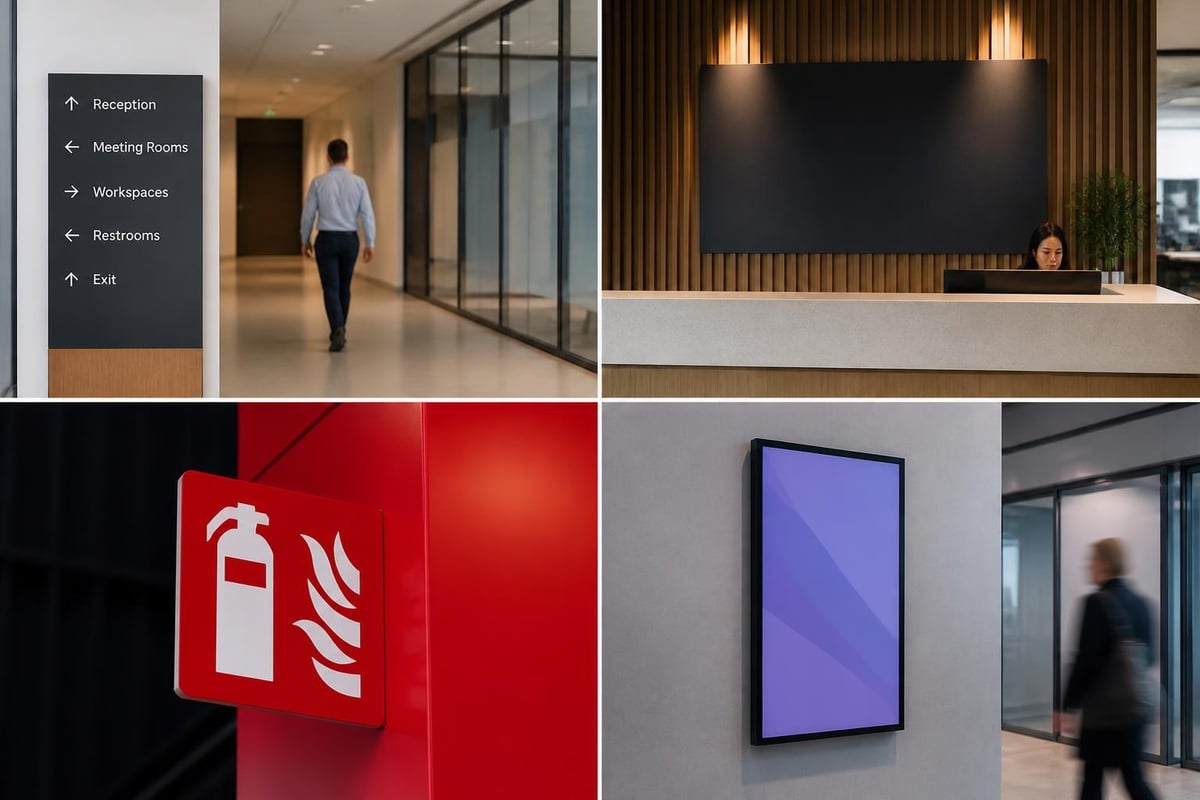
Office signage fulfils multiple critical functions that extend far beyond simple decoration. At its foundation, workplace signage systems provide wayfinding and navigation, helping employees, clients, and visitors locate specific departments, meeting rooms, facilities, and exits without confusion or delays. This directional purpose becomes particularly vital in larger office complexes or multi-storey buildings where intuitive navigation directly impacts productivity and visitor experience.
Beyond navigation, office signage reinforces corporate identity and branding throughout the physical workspace. Consistent use of company colours, logos, and design language on signs creates a cohesive visual environment that strengthens brand recognition and communicates professionalism. This branding function extends from the reception area through to individual department zones, creating a unified aesthetic that reflects organizational values.
Regulatory compliance and safety represent another essential function. Offices must display specific signage to meet health and safety regulations, fire safety requirements, and accessibility standards. ADA compliance resources provide comprehensive guidelines for implementing accessible signs that serve all building users, including those with disabilities. Emergency exit signs, fire evacuation plans, and hazard warnings protect occupants whilst fulfilling legal obligations.
Communication and information dissemination also rank among key functions. Office signage delivers operational messages, company announcements, meeting schedules, and workplace policies in visible, accessible formats. This communicative role has evolved significantly with digital solutions that enable real-time content updates.
Essential Types of Office Signage Solutions
Exterior and Entry Signage
The first impression begins outside your office. Building identification signs announce your presence to the street, whilst entrance signage welcomes visitors and confirms they've arrived at the correct location. These exterior elements must withstand weather conditions whilst maintaining visual impact and brand consistency.
Monument signs positioned at building entrances or property boundaries provide prominent, ground-level identification. For multi-tenant buildings, directory boards at main entrances list all occupants with corresponding suite or floor numbers, streamlining visitor navigation from the outset.
Interior Wayfinding Systems
Comprehensive wayfinding encompasses several sign types working together:
- Directory boards in reception areas mapping the entire office layout
- Directional signs at corridors and intersections pointing to specific destinations
- Room identification signs labelling individual offices, conference rooms, and facilities
- Floor level indicators in stairwells and lift lobbies
- Department markers delineating different organizational zones
Effective wayfinding systems follow consistent design principles, using uniform colours, typography, and symbol sets that users quickly learn to recognize and trust.
Safety and Compliance Signage
Regulatory signage protects both people and organizations. Emergency exit signs with illuminated or photoluminescent features remain visible during power failures. Fire safety signage includes extinguisher locations, fire alarm points, assembly areas, and evacuation routes clearly marked according to EU workplace safety standards.
Accessibility signage identifies accessible entrances, lifts, toilets, and parking spaces, ensuring compliance with disability access requirements. Warning signs highlight potential hazards such as wet floors, low clearances, or restricted areas, whilst mandatory signs communicate required actions like wearing protective equipment in specific zones.
| Safety Sign Type | Primary Purpose | Typical Placement |
|---|---|---|
| Emergency Exit | Evacuation guidance | Above doors, corridors |
| Fire Extinguisher | Equipment location | Near extinguishers |
| Accessible Facility | Accessibility guidance | Entrances, facilities |
| First Aid | Medical assistance | First aid stations |
| Restricted Area | Access control | Secure zones |
Branding and Identity Signage
Reception signage creates the focal point in your entrance area, typically featuring dimensional letters, illuminated displays, or premium materials that reflect company positioning. These statement pieces set the tone for the entire office experience.
Dimensional lettering and logos on walls throughout the office maintain brand presence without overwhelming the workspace. Fabricated 3d Signage offers sophisticated solutions for corporate branding, with illuminated or non-illuminated channel letters that create visual impact whilst maintaining professional elegance.
Department identification signs help orient employees and visitors whilst reinforcing organizational structure. These range from simple vinyl graphics to elaborate themed environments that reflect each department's unique culture within the broader brand framework.
Digital and Dynamic Signage
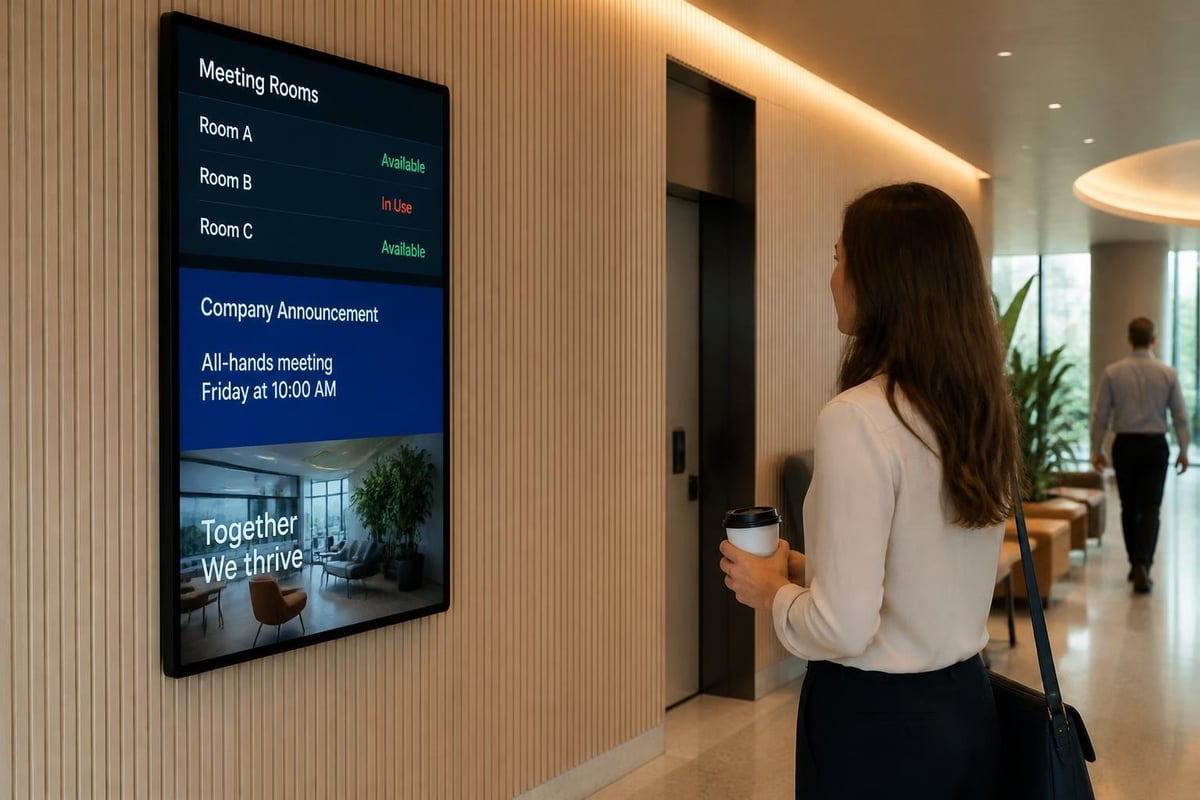
Digital displays have revolutionized office communication. Digital directory boards offer searchable, updateable building directories that visitors can interact with directly. Information displays in common areas broadcast company news, performance metrics, event schedules, and real-time data feeds.
Meeting room booking panels mounted outside conference spaces show current availability, upcoming reservations, and allow instant bookings. These tablet-based or e-paper displays integrate with calendar systems to streamline meeting space management. According to current digital signage trends, organizations increasingly deploy these interactive solutions to improve space utilization and reduce booking conflicts.
Employee communication screens in break rooms, cafeterias, and lobbies share organizational updates, recognition programmes, safety reminders, and wellness information in engaging, dynamic formats that static signs cannot match.
Design Principles for Effective Office Signage
Visibility and Readability
Successful office signage must be immediately visible and effortlessly readable. Contrast ratios between text and background should meet accessibility standards, typically requiring a minimum contrast ratio of 4.5:1 for standard text. Font selection matters enormously; sans-serif typefaces like Helvetica, Arial, or DIN offer superior legibility at various distances and sizes.
Letter sizing should correspond to viewing distance. A general rule suggests 1 inch of letter height for every 10 feet of viewing distance for optimal readability. Viewing angles also influence placement; signs positioned too high or at awkward angles become difficult to read despite adequate size.
Lighting considerations determine whether signs remain effective throughout the day. Internal illumination ensures 24-hour visibility for critical wayfinding and safety signs. For non-illuminated signs, ensure adequate ambient or accent lighting eliminates shadows and maintains readability.
Consistency and Hierarchy
Visual consistency across your signage system creates intuitive navigation. Establish and maintain uniform:
- Colour schemes that align with brand guidelines
- Typography families and weights for different sign types
- Material selections appropriate to location and function
- Mounting methods that create cohesive presentation
- Symbol and icon libraries used throughout
Information hierarchy organizes content by importance. Primary information (destination names, room numbers) should dominate visually, whilst secondary details (hours of operation, occupancy) appear in smaller, subordinate typography. This layered approach enables quick scanning and information extraction.
Universal Design Principles
Inclusive signage serves all users regardless of ability. Universal design guidance emphasizes equitable use, flexibility, simplicity, and perceptible information. Practical applications include:
- Tactile elements with raised letters and Braille for visually impaired users
- Pictograms and symbols that transcend language barriers
- Colour coding supported by text and symbols, not relying on colour alone
- Mounting heights that accommodate wheelchair users and standing adults
- Clear language avoiding jargon, using plain English for maximum comprehension
Strategic Placement and Installation Considerations
Location Planning
Strategic placement maximizes signage effectiveness whilst minimizing visual clutter. Decision points where people choose direction require clear directional signage; these typically occur at corridor intersections, lift lobbies, stairwell entries, and building entrances.
Sight lines should be analyzed during planning. Position signs within natural fields of view, avoiding placement behind architectural elements, furniture, or in areas where they'll be obscured by door swings or traffic flow.
Mounting heights follow established standards: typical wall-mounted signs position their centerline at 1.5 to 1.8 metres above finished floor, whilst overhead suspended signs should maintain minimum clearances above traffic areas.
Material Selection
Material choices balance aesthetics, durability, maintenance requirements, and budget:
| Material | Best Applications | Key Benefits | Considerations |
|---|---|---|---|
| Acrylic | Interior branding, directories | Clean appearance, versatile | Scratches over time |
| Aluminium | Exterior, high-traffic areas | Weather-resistant, durable | Higher cost |
| Vinyl graphics | Temporary, budget-conscious | Cost-effective, quick install | Limited lifespan |
| Wood | Warm, hospitality environments | Premium aesthetic | Requires maintenance |
| Digital displays | Dynamic content areas | Updateable content | Power requirements |
Interior applications allow broader material choices, whilst exterior signage demands weather-resistant options like treated aluminium, HDU (high-density urethane), or marine-grade acrylics that withstand UV exposure, temperature fluctuations, and moisture.
Integration with Architecture
Exceptional office signage integrates seamlessly with architectural elements rather than appearing as afterthoughts. Collaborate with architects and interior designers during space planning to identify optimal sign locations, coordinate finishes, and ensure electrical provisions for illuminated or digital signs reach designated locations.
Modular systems offer flexibility for growing or reorganizing offices. Interchangeable sign panels allow quick updates when personnel or departments change, extending the system's lifespan and reducing long-term costs. Consider both current needs and anticipated future modifications when specifying signage infrastructure.
Maintenance and Updating Strategies
Regular Inspection and Cleaning
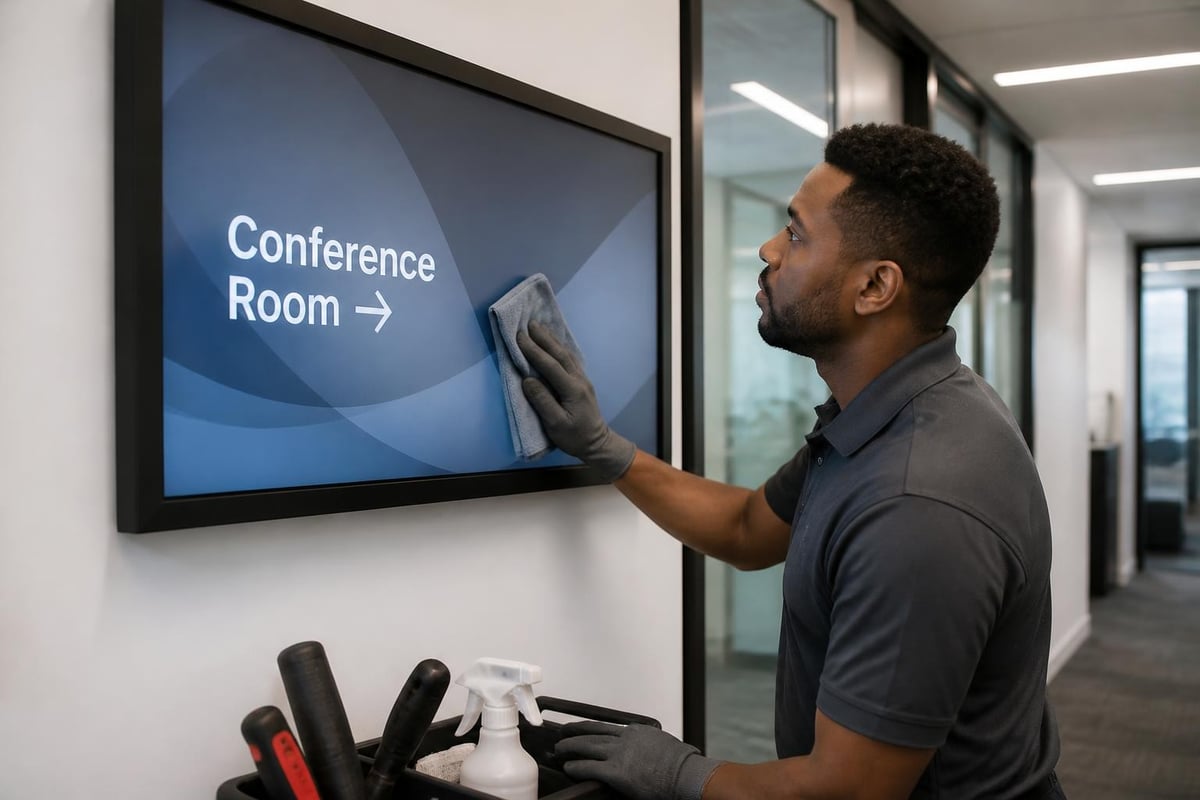
Signage maintenance preserves appearance and functionality. Establish regular cleaning schedules appropriate to location and material:
- High-traffic areas require weekly cleaning
- General office signage needs monthly attention
- Exterior signs benefit from quarterly deep cleaning
Different materials demand specific cleaning methods. Acrylic signs respond well to mild soap and microfiber cloths, whilst avoiding ammonia-based cleaners that cause crazing. Digital displays require specialized screen cleaners that won't damage protective coatings.
Illuminated signage requires periodic lamp or LED replacement before complete failure. Establish preventive replacement schedules rather than waiting for visible outages that compromise safety and wayfinding.
Content Updates and Adaptability
Offices evolve constantly through reorganizations, personnel changes, and operational shifts. Your signage system must accommodate these changes efficiently. Modular sign systems with replaceable inserts allow in-house updates without replacing entire sign assemblies.
For organizations with frequent changes, digital signage provides ultimate flexibility. Content management systems enable instant updates across multiple displays, eliminating production delays and installation costs associated with physical sign replacement.
Maintain an inventory and documentation system tracking all installed signs by location, type, and installation date. This database streamlines maintenance scheduling, facilitates rapid replacements, and ensures consistency when ordering new signs.
Technology Integration and Future Trends
Smart Building Integration
Modern office signage increasingly connects with broader building management systems. Occupancy sensors coupled with digital displays provide real-time information about available meeting spaces, parking availability, or desk hoteling options. This integration improves space utilization whilst enhancing user experience through immediate, accurate information.
Wayfinding apps extend physical signage into digital realms. Smartphone applications guide visitors from car park to specific desks, meeting rooms, or amenities using indoor positioning technology. Physical signs serve as waypoints and confirmations within these integrated navigation experiences rather than standalone solutions.
Emergency communication systems utilize digital signage networks to broadcast urgent alerts, evacuation instructions, or shelter-in-place directives during emergencies. This dual-purpose infrastructure maximizes return on technology investments whilst enhancing occupant safety.
Sustainable Signage Solutions
Environmental responsibility influences contemporary signage decisions. LED illumination consumes 75-80% less energy than traditional fluorescent or incandescent lighting whilst offering significantly longer operational lifespans. Solar-powered options for exterior signs eliminate electrical infrastructure costs and ongoing energy consumption.
Recyclable materials and low-VOC adhesives minimize environmental impact. Specify signs constructed from recycled content where possible, and select vendors committed to sustainable manufacturing practices. The longevity focus inherent in quality signage also supports sustainability by reducing replacement frequency.
Digital transformation reduces physical waste associated with frequent sign updates. Organizations previously producing dozens of paper posters monthly for announcements can consolidate communications onto digital displays, dramatically reducing material consumption and disposal.
Personalization and Interactivity
Emerging technologies enable increasingly personalized experiences. Interactive wayfinding kiosks offer directions in multiple languages, accessibility options, and personalized routing based on individual mobility needs. Touchscreen directories remember frequent visitor destinations, streamlining subsequent visits.
QR codes on physical signs bridge to digital content, providing detailed information, videos, or translation options without cluttering the primary sign with excessive text. This layered information approach maintains clean visual design whilst offering depth for those requiring additional details.
Strategic office signage creates environments where navigation feels intuitive, branding appears cohesive, and communication flows effortlessly throughout your workspace. Whether you're implementing a comprehensive wayfinding system or updating specific elements, partnering with experienced signage professionals ensures your investment delivers lasting value. Signshoponline brings extensive expertise in creating custom signs, digital solutions, and complete signage systems tailored to your unique workplace requirements. Contact their team to transform your office environment with professional signage solutions that enhance functionality, reinforce your brand, and create exceptional experiences for everyone who enters your space.